The AI-Native Industrial Revolution: Redefining Manufacturing through Generative Intelligence
I. Introduction – From Automation to AI-Native Manufacturing
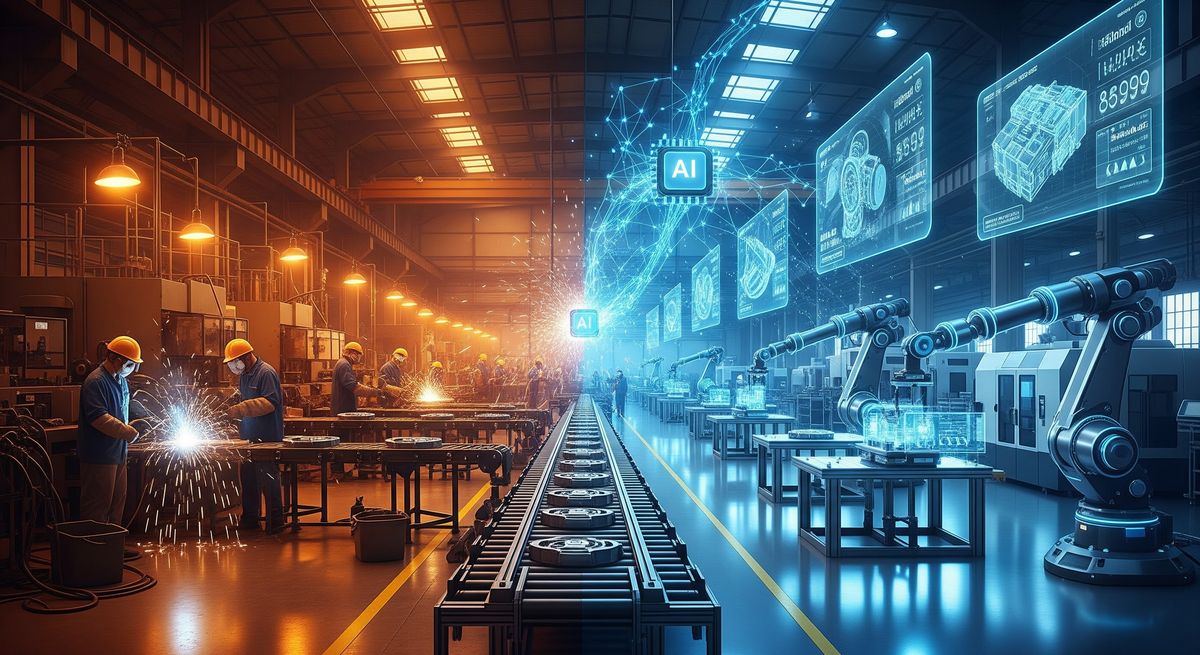
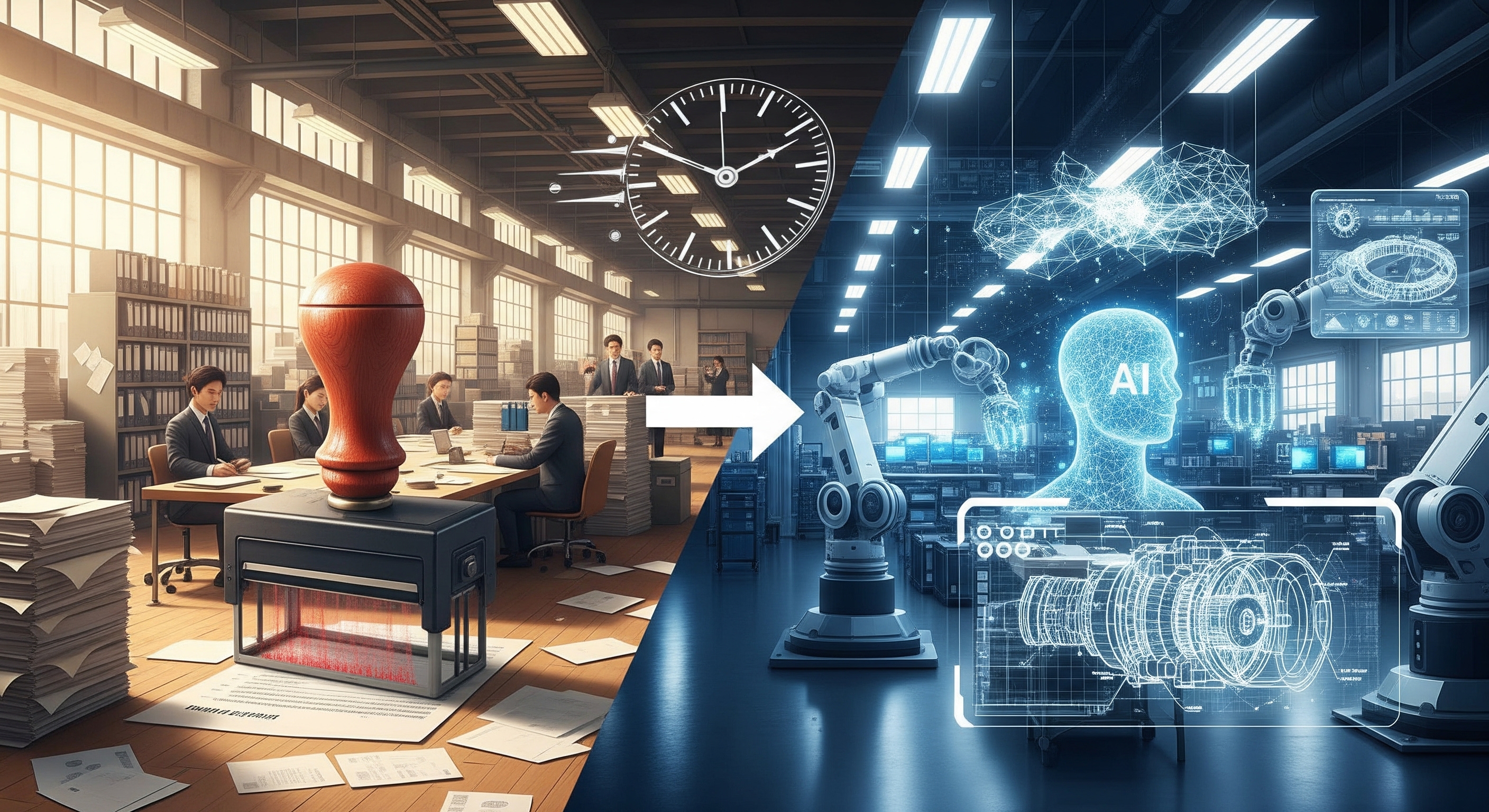
The global manufacturing sector is undergoing a pivotal shift. Decades of rigid, deterministic automation are giving way to adaptive, data-driven intelligence due to volatile demand, supply chain issues, cost pressures, and skilled labor shortages. Generative AI (GenAI) is structurally redefining industrial value creation by creating manufacturable designs, control code, failure scenarios, and complex recipes, fundamentally transforming product design, production, and decision-making.
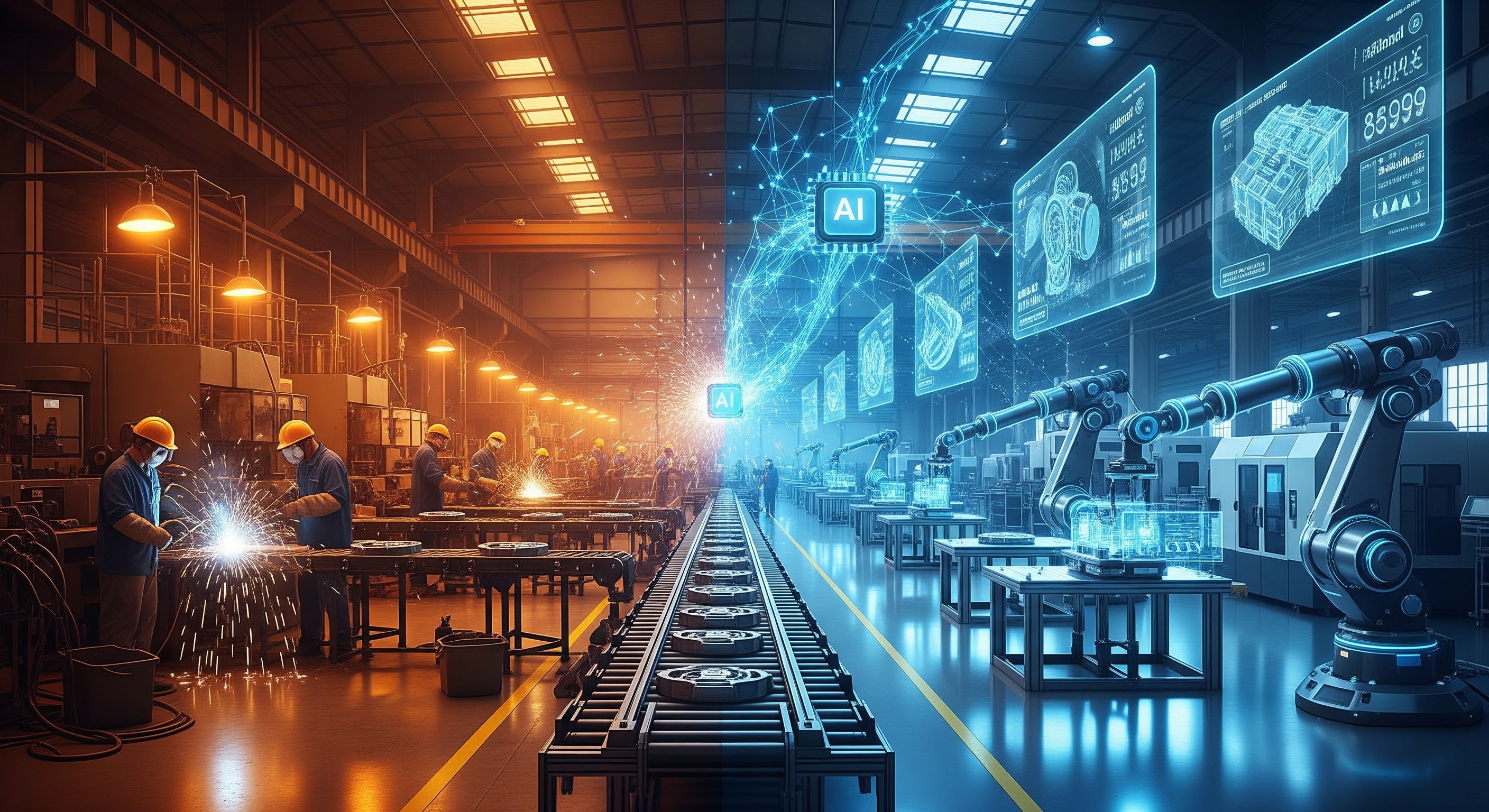
This report posits that Generative AI marks the transition to "AI-Native Manufacturing"—a decisive move from isolated predictive models integrated workflows where algorithms act as co-creators alongside engineers and operators. The technology functions as a force multiplier, compressing design cycles, democratizing expertise, and enabling operational resilience. Leading organizations are already moving from pilots to strategic deployments, leveraging industrial foundation models to drive gains in speed, quality, and sustainability.
Defining Generative AI in the Industrial Context
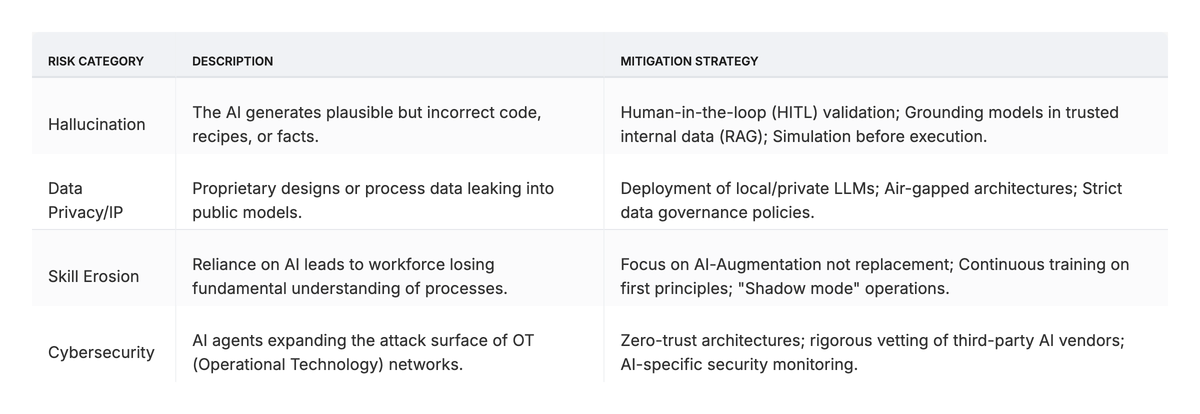
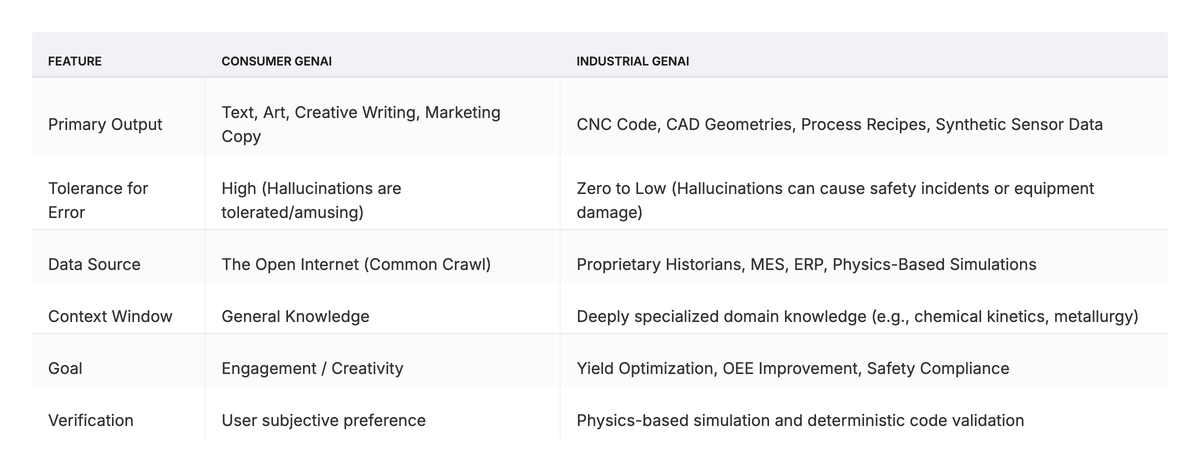
Industrial GenAI adapts LLMs for the factory floor under strict safety constraints. Unlike consumer AI, manufacturing demands zero-tolerance for error, as hallucinations risk equipment failure, safety incidents, or massive scrap. Therefore, Industrial GenAI requires "grounding"—tethering models to verifiable data, physical laws, and physics-based simulations—to prevent catastrophic, incorrect outputs.
Table 1: Structural Differences Between Consumer and Industrial Generative AI
Retrieval-Augmented Generation (RAG) is vital for industrial AI, adding a governance layer by forcing models to reference trusted internal documents—like manuals, SOPs, and historical data—before generating a response, grounding AI creativity in factory reality.
AI-Native Manufacturing focuses on "co-creation," augmenting human expertise. GenAI combats the "Silver Tsunami" by preserving institutional memory, allowing junior staff to create complex PLC code from natural language and supply chain managers to simulate disruptions. This elevates human roles to strategic oversight over intelligent agents, creating an efficient and resilient manufacturing ecosystem.
II. Design-to-Production Intelligence: Reinventing Creation
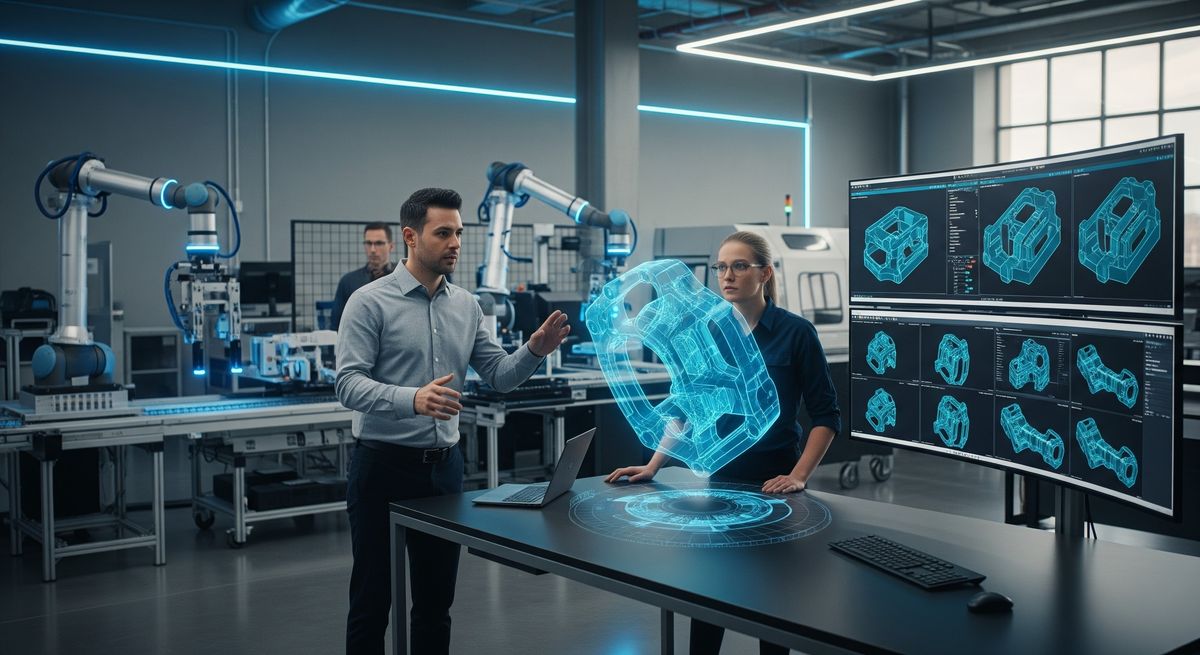
Traditional product development is slow and linear (concept to testing). Generative AI introduces "inverse design": engineers specify performance, and the AI creates the geometry. Generative design, unlike topology optimization, is revolutionizing aerospace and automotive sectors by "growing" organic parts with optimal stiffness-to-weight ratios that human intuition cannot achieve, exploring the full solution space.
NASA's Goddard Space Flight Center uses AI generative design for specialized spacecraft and optical instrument components.These "evolved structures" bear little resemblance to human-designed parts; Generative AI creates "alien" designs with complex load paths. NASA's generative designs, refined through FEA and accelerated evolution, are up to two-thirds lighter, tolerate higher loads, and cut development time from months to days. This allows prototyping, analysis, and fabrication in as little as one week, reducing mission risk via rigorous testing (Ryan McClelland). This mass reduction benefits commercial aviation and automotive sectors by improving fuel efficiency and lowering emissions, as even a one-kilogram cut saves substantial lifetime fuel in an aircraft. In case studies involving aircraft seat frames, generative design has demonstrated the potential to reduce weight by 56% when combined with magnesium materials. Generative AI is driving major industrial shifts. In aerospace, Generative AI designs for lighter Airbus A380 cabin components, enabled by Additive Manufacturing, could save a fleet of 100 aircraft over $206 million in fuel. This AI-3D printing synergy also speeds up certification via virtual testing. For process industries (chemicals, pharma, food & beverage), GenAI optimizes formulations to achieve the "Golden Batch." In molecular discovery and pharmaceuticals, GenAI replaces costly trial-and-error by predicting protein structures and proposing optimal molecules/drug candidates based on specific criteria (e.g., toxicity, stability).
Deep learning models like AlphaFold have transformed the understanding of protein folding, but newer generative models are now designing proteins that do not exist in nature. In the realm of material science, researchers have used AI to identify battery electrolyte formulations that extend battery life by 20% while reducing costs, and to predict metal-organic frameworks (MOFs) for carbon capture with 95% accuracy. This shifts the R&D process from "finding" molecules to "designing" them.
Optimizing the "Golden Batch"
Beyond discovery, GenAI optimizes the manufacturing process itself. In catalytic cracking—a critical process in petrochemical refining—Shell has implemented AI to optimize operations. AI analyzes historical process data to suggest optimal temperature, pressure, and flow rate setpoints, maximizing yield and minimizing energy. This resulted in a 5% increase in fuel yield and lower energy use.The shift moves from fixed-setpoint control ("running to target") to dynamic optimization ("running to potential"). AI boosts profit and efficiency by constantly adjusting to variables (feedstock, temperature, catalyst), going beyond the process stability focus of traditional systems.Automatic Documentation and Engineering Assets
GenAI's immediate high-value application is generating engineering documentation and code. The "unsexy" but bottleneck-creating work of manufacturing—writing G-code, creating BOMs, and updating Work Instructions—wastes significant engineering hours.
Automated Code Generation
Engineering Copilots are transforming the role of the automation engineer. Platforms like the Siemens Industrial Copilot and Rockwell Automation’s FactoryTalk Design Studio now integrate GenAI to generate Programmable Logic Controller (PLC) code from natural language prompts.
An engineer can use an AI Copilot to quickly generate standardized, error-reducing Structured Text (ST) or Ladder Logic for tasks like PID controllers. This tool tutors junior engineers by explaining code and suggesting optimizations, while enabling senior engineers to offload boilerplate work and concentrate on complex logic and system architecture.
Synchronization of the Digital Thread
The gap between "as-designed" and "as-built" data in manufacturing, known as the "hidden factory," is closed by GenAI. It automatically synchronizes shop floor data—updating work instructions, generating visuals, and revising BOMs—to reflect design changes. This ensures the use of the latest specifications, drastically cutting rework and scrap during New Product Introduction (NPI).
III. AI-Augmented Operations: Copilots, Quality, and Closed-Loop Control
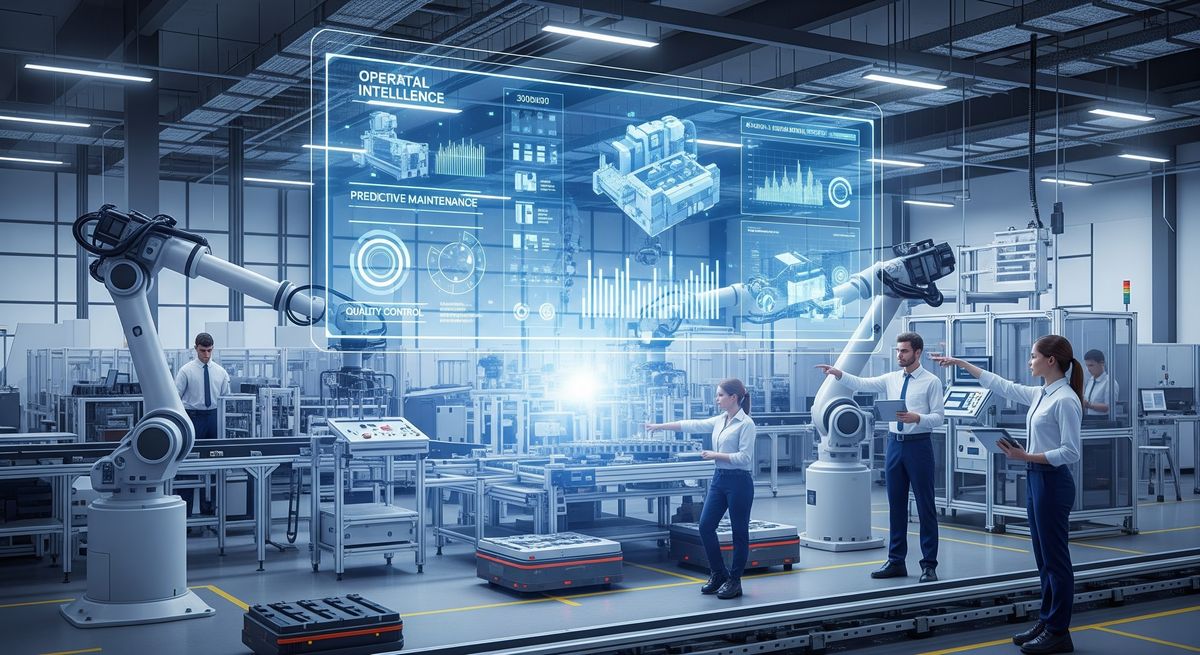
GenAI acts as an active operations manager, connecting digital and human systems to cut downtime and inefficiency.
Industrial Copilots: The Super-Worker
"Industrial Copilots" are domain-specific LLMs integrated with operational systems (MES, SCADA, CMMS), acting as the standard human-machine interface for operators to converse with equipment.
Democratizing Data Access
Copilots simplify fault diagnosis. Instead of an expert checking multiple sources, an operator can ask a question (e.g., "Why is Line 3 vibrating?"). The AI uses RAG to instantly analyze real-time data, history, logs, and manuals for a solution. Siemens and Microsoft collaborations also bridge language gaps through real-time technical translation.
Preserving Tribal Knowledge
By ingesting shift logs and notes, GenAI captures retiring technicians' intuitive knowledge. A Copilot surfaces this institutional wisdom for new technicians, offering specific historical insights.
Quality Control and Synthetic Data Generation
Computer Vision for quality inspection is slowed by the "cold start" problem—the lack of defect images for training models. This data scarcity, common in high-quality manufacturing, delays AI deployment for new products.
The Synthetic Data Revolution
Generative AI solves this by creating synthetic data. Using tools like NVIDIA Omniverse and Isaac Sim, manufacturers can generate photorealistic images of scratches, dents, and misalignments on digital twins of their products. These images are physically accurate, reflecting how light interacts with different materials (e.g., the reflection on a metal surface vs. a matte plastic).
Deep Dive: BMW’s Virtual Factory
BMW Group is a global leader in this application. Using NVIDIA Omniverse to train its quality inspection models. AI models are pre-trained using simulated factory environments, which create thousands of variations in lighting, angles, and defects. This "simulation-to-reality" transfer ensures the inspection system is expert before physical production begins, significantly cutting ramp-up time and guaranteeing high quality from the start. Additionally, synthetic data eliminates PII and allows for balanced datasets, addressing privacy and bias concerns.
Toward Closed-Loop and "Self-Tuning" Production Systems
The ultimate horizon of Industrial AI is the autonomous, self-optimizing plant. While we are not yet at the stage of "lights-out" manufacturing for complex processes, GenAI is enabling a move from automation to autonomy through "Large Process Models" (LPMs).
Large Process Models (LPMs)
Just as LLMs predict the next word in a sentence, LPMs are trained on vast time-series datasets to predict the next state of a machine or process. Honeywell has recently unveiled initiatives focusing on this shift from automation to autonomy. These models understand the multivariate relationships between thousands of sensors—how a temperature spike in the reactor affects viscosity three hours later in the finishing line.
Unlike traditional PID controllers which react to errors, LPM-driven controllers can be predictive and proactive. They can suggest control moves to the operator or, in closed-loop configurations, directly adjust setpoints to maintain the process within the "golden" operating envelope. Researchers have demonstrated that LPM-driven controllers can outperform classical PID control in handling nonlinear dynamics and asymmetric disturbances.
Robustness and Resilience
A critical advantage of these AI-driven systems is resilience. At Rutgers University, engineers developed an AI for additive manufacturing that can adapt to unexpected disturbances without stopping the printer. The system was trained to "expect the unexpected," allowing it to correct for errors in real-time and reducing defects by 10 times. This capability is vital for "expeditionary manufacturing"—producing parts in remote or hostile environments (like forward operating bases or space stations) where stability cannot be guaranteed.
IV. Beyond the Factory Walls: Supply Chain, ESG, and Workforce Transformation
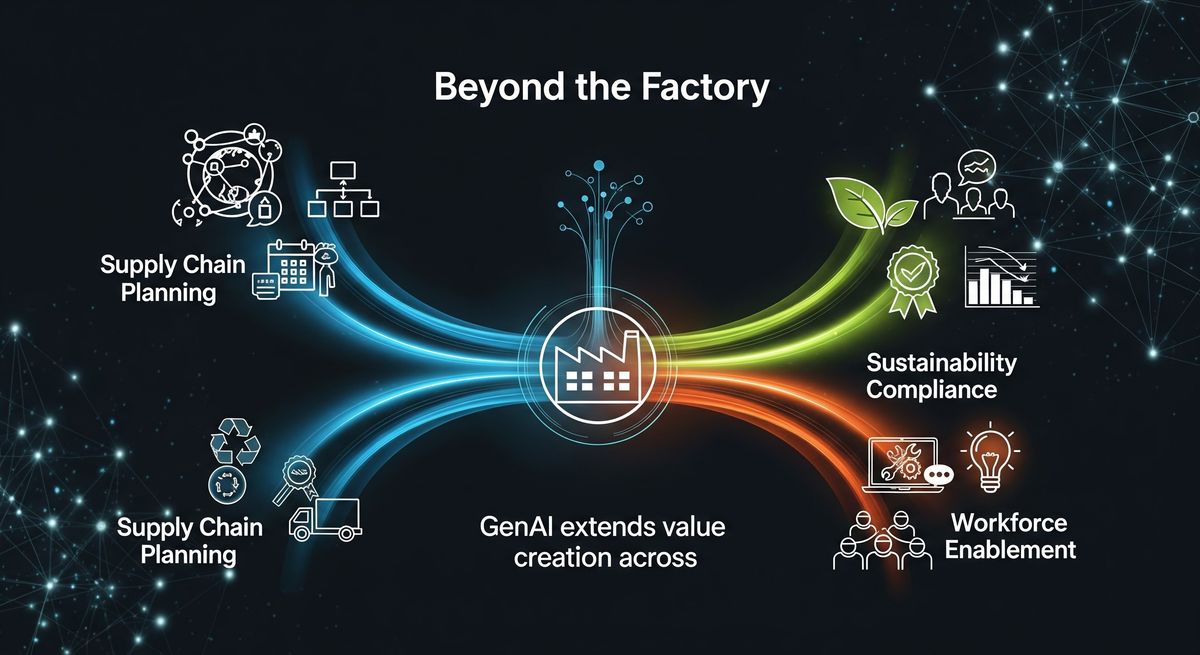
GenAI's influence extends beyond the shop floor, transforming supply chain interactions, sustainability reporting, and workforce management.Supply Chain and Planning Intelligence
Recent global events highlight increasingly fragile supply chains. Traditional, deterministic planning systems fail in real-world chaos. GenAI enables "probabilistic" planning and intelligent scenario modeling.
Generative Scenario Planning
Blue Yonder and other supply chain software leaders are integrating GenAI to allow planners to query their supply chain in natural language. GenAI acts as a "logistics agent," using supply chain digital twins to predict and mitigate the impact of supplier delays (e.g., a Taiwanese typhoon causing a two-week delay) on Q3 margins.
These "intelligent agents" autonomously manage micro-adjustments. A weather-delayed truck, for instance, triggers an agent to automatically find an alternative route, calculate cost changes, and update the warehouse schedule. Human managers are only alerted for costs exceeding a preset limit, shifting supply chain management to proactive orchestration.
Inventory and Demand Resilience
GenAI also enhances demand forecasting by synthesizing external signals—weather, social media, geopolitics—into the planning model. This ensures "inventory resilience" by optimizing safety stock based on forward-looking risk assessments, rather than just historical variance.
Sustainability, Compliance, and Reporting
Sustainability is now a regulatory requirement for operation. The European Union’s Corporate Sustainability Reporting Directive (CSRD) and California’s SB-253 mandate rigorous disclosure of Scope 1, 2, and 3 emissions. Collecting this data is a massive challenge, often involving thousands of spreadsheets and unstructured data from suppliers.
GenAI is ideal for automating the "unstructured data" problem of ESG reporting. It can ingest documents like utility bills and invoices, extracting essential energy and material data to calculate carbon footprints.Tools utilizing GenAI can automate the drafting of CSRD-compliant reports, comparing language year-over-year to ensure consistency and flagging anomalies that might trigger an audit.
GenAI significantly reduces the environmental footprint by optimizing energy use (e.g., Shell, BMW's SORDI dataset) and cutting material waste via generative design (e.g., Airbus/NASA).
On the factory floor, GenAI is an up-skilling tool, not a replacement. It changes the operator's role to a supervisor managing digital workflows. This transition is supported by GenAI-powered, personalized micro-learning, such as on-demand, visual step-by-step guides for rare tasks.
For multinational manufacturing, GenAI also breaks down language barriers, aiding standardization.GenAI-powered translation tools, such as those integrated into smart radios or tablets, allow for seamless communication. A safety alert issued in English can be heard in Spanish, Vietnamese, or German by workers on the line, ensuring that safety protocols are universally understood.
V. Conclusion – Building an AI-Native Manufacturing Strategy
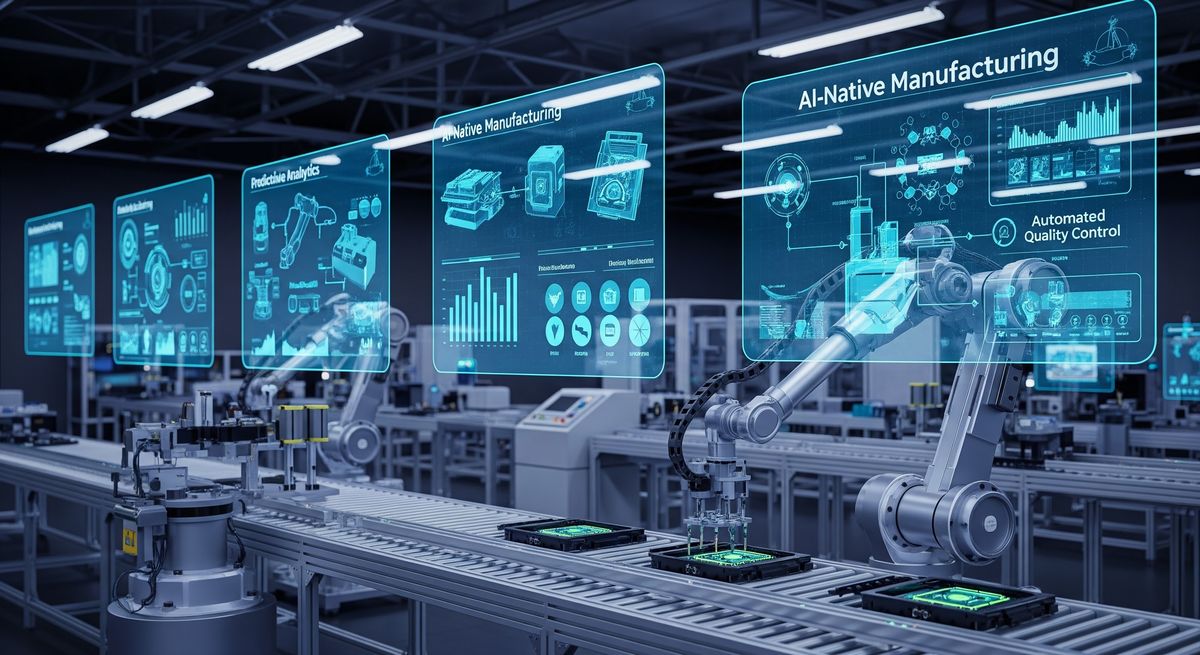
Generative AI is already transforming manufacturing (e.g., NASA, Shell, BMW), requiring a shift from piloting to strategic capability building.
From Experimentation to Strategy
Many firms are stuck in "pilot purgatory" due to poor data infrastructure. GenAI must be treated as infrastructure, demanding investment in "Industrial DataOps" to clean and contextualize shop-floor data, as unreliable data renders GenAI useless.
A Pragmatic Roadmap
- Augmentation (0-12 months): Deploy Industrial Copilots for maintenance/engineering ("low regret" moves like automated documentation/code generation with human verification).
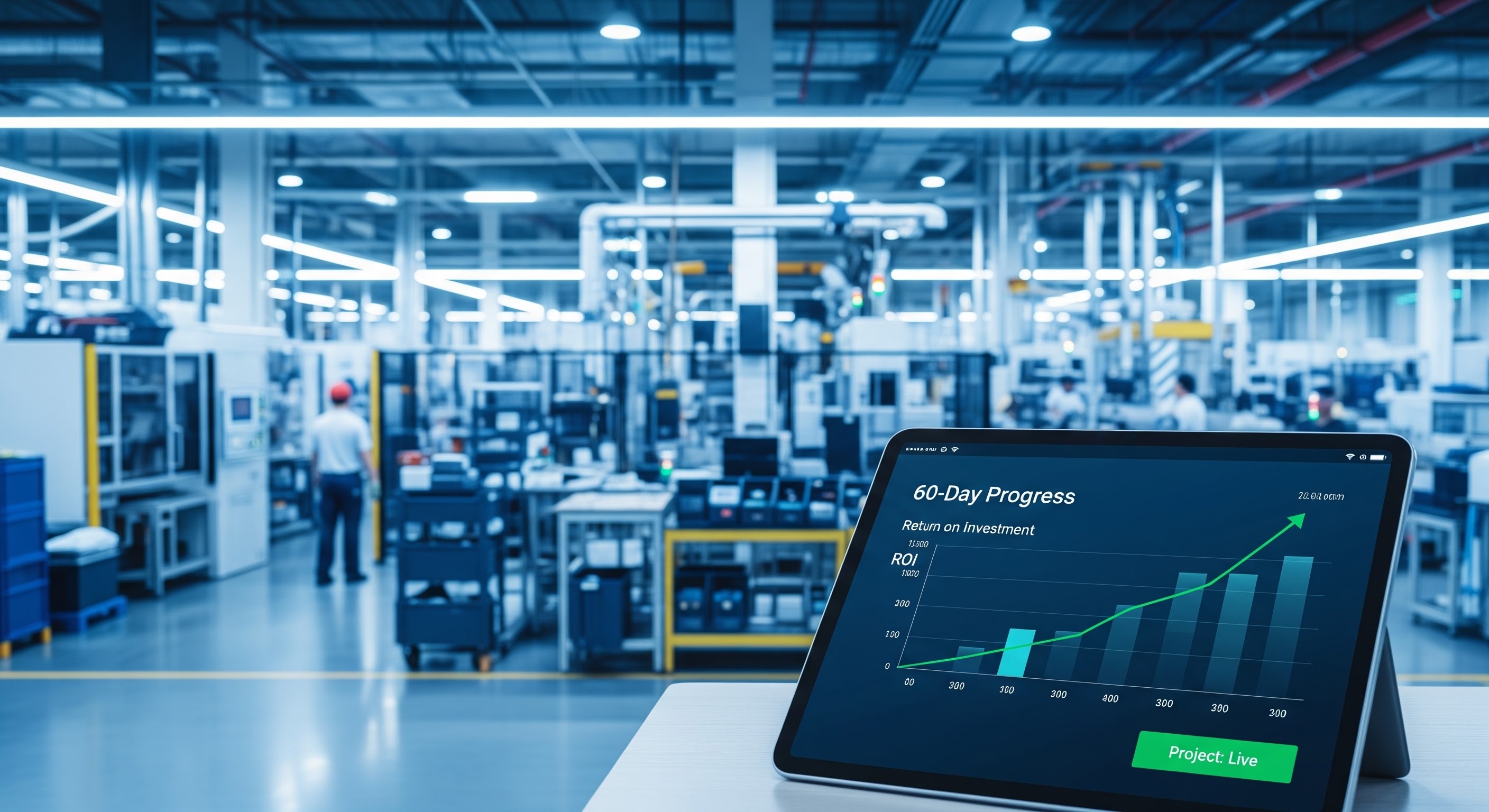
- Optimization (12-24 months): Use generative design in R&D and closed-loop control in stable processes. Employ synthetic data for New Product Introduction (NPI) quality models.
- Autonomy (24+ months): Scale Large Process Models to govern production lines and integrate autonomous supply chain logistics agents.
The Leadership Challenge
The main obstacle is cultural adoption. Leaders must foster "digital curiosity" alongside safety, enabling the workforce to solve complex problems rather than focusing on headcount reduction. This mindset will usher in an era of resilient, efficient, and sustainable operations. If you are ready to transform your operations and drive measurable value through intelligent automation, we invite you to explore our website. Our team specializes in guiding industrial leaders through the complexities of AI adoption, ensuring you build a future-proof strategy that delivers real-world results.
Table 2: Key Strategic Risks and Mitigation in Industrial GenAI