Introduction: The End of the Run-to-Failure Era
For decades, industrial maintenance has been governed by a simple, yet profoundly costly, philosophy: if it isn't broken, don't fix it.
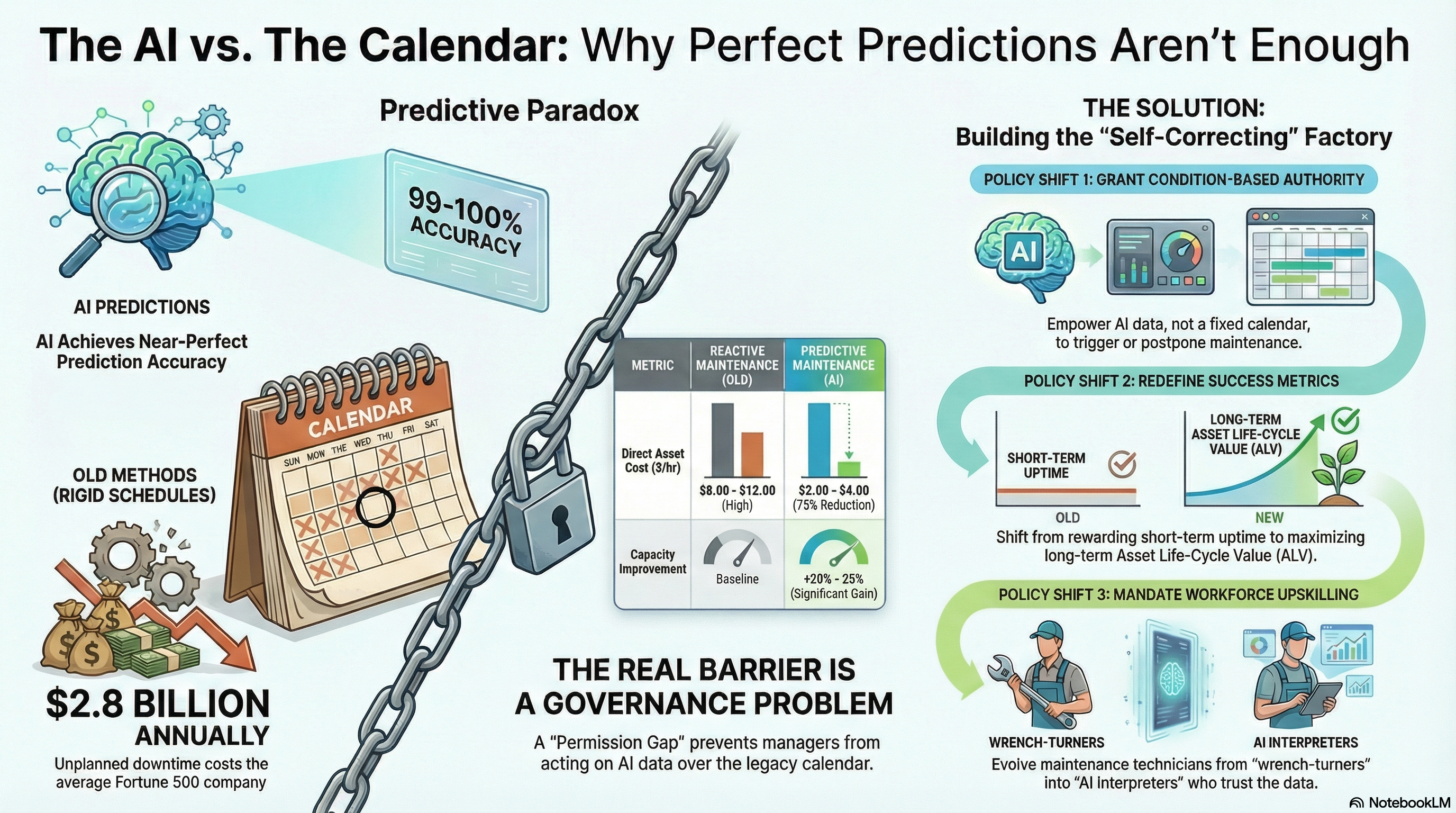
This approach, known as reactive maintenance, has left organizations in a perpetual state of crisis management, responding to equipment failures only after they occur. The consequences of this "run-to-failure" strategy are severe, creating a volatile operational environment defined by unpredictable downtime, inflated costs, diminished asset longevity, and heightened safety risks.
The financial toll is staggering; studies estimate that a single hour of unplanned downtime can cost a company up to $260,000, contributing to an annual industry-wide loss of $50 billion. Emergency repairs, born from this reactive posture, are inherently more expensive, often costing 300-400% more than planned maintenance due to the need for premium labor, expedited parts procurement, and the frequent occurrence of collateral damage to adjacent components. This constant firefighting not only drains budgets but also accelerates equipment degradation, with some analyses suggesting that a purely reactive strategy can shorten an asset's lifespan by as much as 35-50% compared to proactive approaches.
This operational instability often traps maintenance teams in a "maintenance death spiral." When an unexpected failure occurs, it demands immediate, all-hands-on-deck attention. This emergency response inevitably diverts resources—personnel, time, and budget—away from scheduled preventive work. As routine inspections and component replacements are deferred, the probability of subsequent failures increases, creating a self-perpetuating cycle of crisis. The maintenance backlog grows, and the team becomes perpetually trapped in a reactive state, never able to get ahead of the next breakdown.
This is not merely a series of isolated incidents but a systemic accumulation of operational debt, progressively degrading stability and driving up long-term costs. Leadership commitment and strategic clarity are vital in breaking this cycle, especially as highlighted in “The AI Leadership Paradox,” which explores why many companies struggle with effective AI adoption despite large investments.
The evolution to preventive maintenance, which involves scheduled interventions based on fixed time or usage intervals, was a significant step toward mitigating these risks. This approach can reduce unplanned downtime by an estimated 25-30%. However, it introduces its own set of inefficiencies. Preventive maintenance operates on averages and assumptions, often leading to the premature replacement of perfectly healthy components or, conversely, failing to prevent a breakdown that occurs before a scheduled check-up. While it feels proactive, this strategy can create a false sense of security by managing risk based on statistical means rather than the actual, real-time condition of an asset, leaving the organization vulnerable to operational variances and unexpected stress factors.
Today, the convergence of transformative technologies under the banner of Industry 4.0 is enabling a paradigm shift away from these legacy models. The fusion of the Industrial Internet of Things (IIoT), big data analytics, and artificial intelligence (AI) has unlocked the ability to monitor equipment health continuously, analyze complex operational data in real time, and accurately predict failures before they happen. In a global marketplace where the demand for 100% uptime is relentless, this capability is no longer a competitive advantage but a strategic necessity. AI-powered predictive maintenance transforms the maintenance function from a reactive cost center into a proactive, intelligent, and strategic driver of value, reliability, and operational excellence. Scaling AI-driven operations successfully requires more than technology—it means managing change and sustainable impact across all levels, as described in “Scaling AI in Operations”.
This report serves as a definitive guide for strategic decision-makers on this technological transformation. It will provide a comprehensive exploration of how AI is fundamentally reshaping maintenance, dissecting the core technologies, quantifying the profound business impact with real-world data, presenting a practical framework for implementation, and charting the future of intelligent machine health management.
Section 1: Understanding Predictive Maintenance and AI
The transition to an AI-driven maintenance strategy is not an overnight leap but the culmination of a decades-long evolution in industrial philosophy and technology. Understanding this progression is essential for appreciating the fundamental shift that AI represents. It is a journey from reacting to failures, to preventing them on a schedule, to predicting them based on real-time conditions, and ultimately, to prescribing optimal actions to avert them entirely.
The Evolution of Maintenance Strategies
Industrial maintenance has progressed through four distinct generations, each defined by its core philosophy, data requirements, and operational impact. This evolution reflects a continuous search for greater efficiency, reliability, and cost-effectiveness.
- First Generation (Reactive Maintenance): The most basic approach, often called "break-fix," is to run equipment until it fails and then perform repairs. This strategy requires no upfront investment in monitoring or planning but incurs the highest possible costs in terms of unplanned downtime, emergency repairs, and collateral damage. It is a purely passive and disruptive model.
- Second Generation (Preventive Maintenance): This marked the first shift toward proactivity, with maintenance tasks scheduled at regular time- or usage-based intervals (e.g., every six months or 10,000 operating hours). This approach, which emerged in the post-war industrial boom, relies on manufacturer recommendations and historical averages to prevent failures. It was enabled by the first wave of digital tools, such as the Computerized Maintenance Management System (CMMS), used to manage and track these complex schedules. While it reduces catastrophic failures, it is inherently inefficient, as it often leads to unnecessary maintenance on healthy equipment.
- Third Generation (Predictive Maintenance - PdM): This strategy, also known as condition-based maintenance, represents a significant leap in intelligence. Maintenance is performed only when the actual condition of the equipment indicates it is necessary. By using sensors to monitor parameters like vibration and temperature, organizations can analyze trends to predict when a component is likely to fail, allowing them to schedule repairs just in time. This approach aims to solve two major problems: the high costs of unplanned downtime from reactive maintenance and the waste associated with the excessive, often unnecessary, interventions of preventive maintenance.
- Fourth Generation (Prescriptive Maintenance - PsM): This is the current frontier in maintenance evolution. It builds upon predictive insights by using AI to not only forecast a failure but also to recommend the optimal set of corrective actions. A prescriptive system might analyze a predicted failure in the context of production schedules, spare parts inventory, and available labor to recommend the most cost-effective and least disruptive solution.
The following table provides a comparative overview of these four strategies, highlighting the progression in intelligence and value.
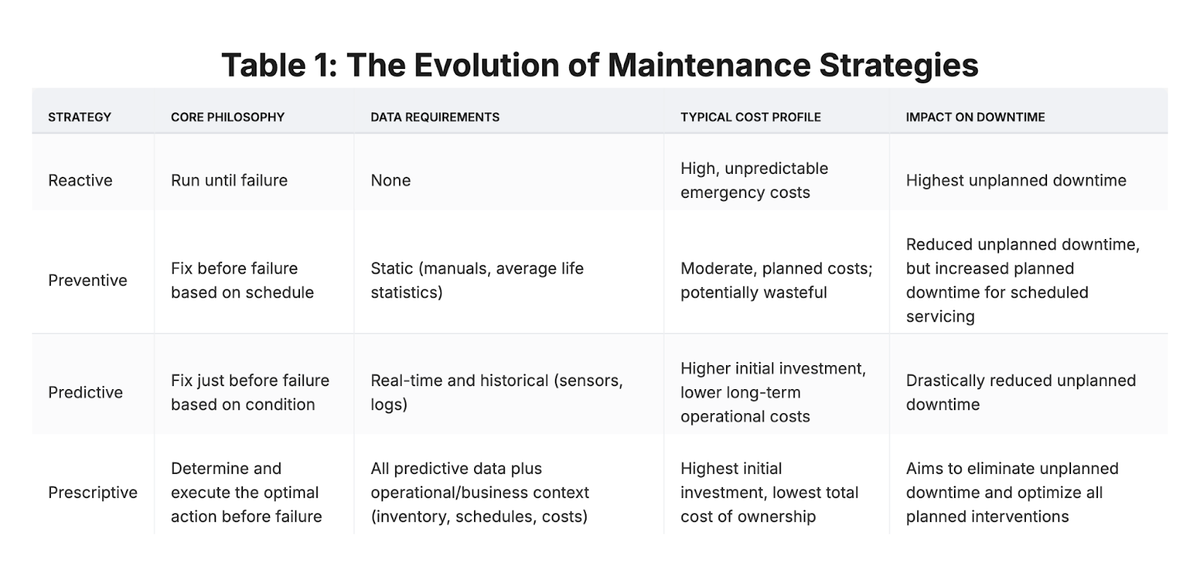
This evolutionary path reveals a clear and powerful trend: the increasing reliance on data to drive more intelligent and efficient maintenance decisions. While the concept of predictive maintenance has existed in simpler forms for decades, its widespread adoption and sophisticated application have only become possible with the advent of Industry 4.0 technologies.
The affordability of advanced IIoT sensors, the vast computational power of the cloud, and the maturation of AI algorithms are the critical enablers that have transformed PdM from a niche capability into a practical and scalable reality for modern industry. This relationship is symbiotic; Industry 4.0 makes advanced PdM possible, and in turn, PdM provides one of the most compelling and quantifiable returns on investment for organizations undertaking a broader digital transformation, making it a "killer app" for the smart factory.
The Role of AI and Machine Learning
At the heart of modern predictive maintenance is artificial intelligence, specifically its subfield of machine learning (ML). AI-powered predictive maintenance is an advanced strategy that employs sophisticated algorithms to analyze real-time and historical data, identify patterns indicative of degradation, and determine when a piece of equipment is approaching a failure point. The core function of AI in this context is to sift through massive, complex datasets and detect subtle correlations and anomalies that are imperceptible to human analysts. For instance, an AI model can learn to associate a specific high-frequency vibration signature with imminent bearing fatigue or a gradual increase in motor temperature with winding degradation, providing an early warning long before the issue becomes critical.
This capability is built upon a foundation of high-quality data. The success of any AI model is dictated by the principle of "garbage in, garbage out". Raw data from industrial environments is often noisy, inconsistent, and incomplete. Therefore, a critical and often underestimated component of a PdM system is the data pipeline responsible for preprocessing—cleaning, normalizing, and filtering—the data before it is fed to the AI models. The true enabler of accurate predictions is not merely the quantity of data collected, but its quality, consistency, and contextual richness. Building a robust data foundation is the hidden key to enterprise-wide AI success, further explored in “Building Data Foundation for AI”.
Several types of machine learning models are employed in predictive maintenance, each suited to different tasks and data types:
- Supervised Learning: These models are trained on historical data that has been "labeled" with known outcomes. For example, a dataset might contain sensor readings from a pump, with specific time periods labeled as "healthy" and others labeled as "failed". The algorithm learns the relationship between the sensor patterns and the labels. This approach is used for two main tasks:
- Classification: Predicting a binary outcome, such as whether a machine will fail within the next 24 hours (Yes/No).
- Regression: Predicting a continuous value, such as the Remaining Useful Life (RUL) of a component in operating hours. Common supervised algorithms include Random Forest, Support Vector Machines (SVM), and Logistic Regression.
- Unsupervised Learning: This approach is used when labeled failure data is scarce or nonexistent, which is common for new equipment or highly reliable assets that rarely fail. Unsupervised models analyze unlabeled data to discover its inherent structure, identifying clusters of normal behavior and flagging any data points that deviate from these patterns as anomalies. This is particularly useful for detecting novel or previously unseen failure modes. Autoencoder neural networks are a powerful technique for this type of anomaly detection.
- Deep Learning: This is a more advanced class of machine learning that uses multi-layered neural networks to learn from vast amounts of data. For predictive maintenance, deep learning models like Long Short-Term Memory (LSTM) networks are especially powerful. LSTMs are designed to analyze time-series data—sequential data points collected over time, such as sensor readings—and are exceptionally good at understanding temporal dependencies and long-term patterns that precede a failure.
The Core Technology Stack
A successful AI-powered predictive maintenance system is built on a robust and integrated technology stack. Each layer plays a critical role, from data acquisition at the machine level to complex analysis in the cloud.
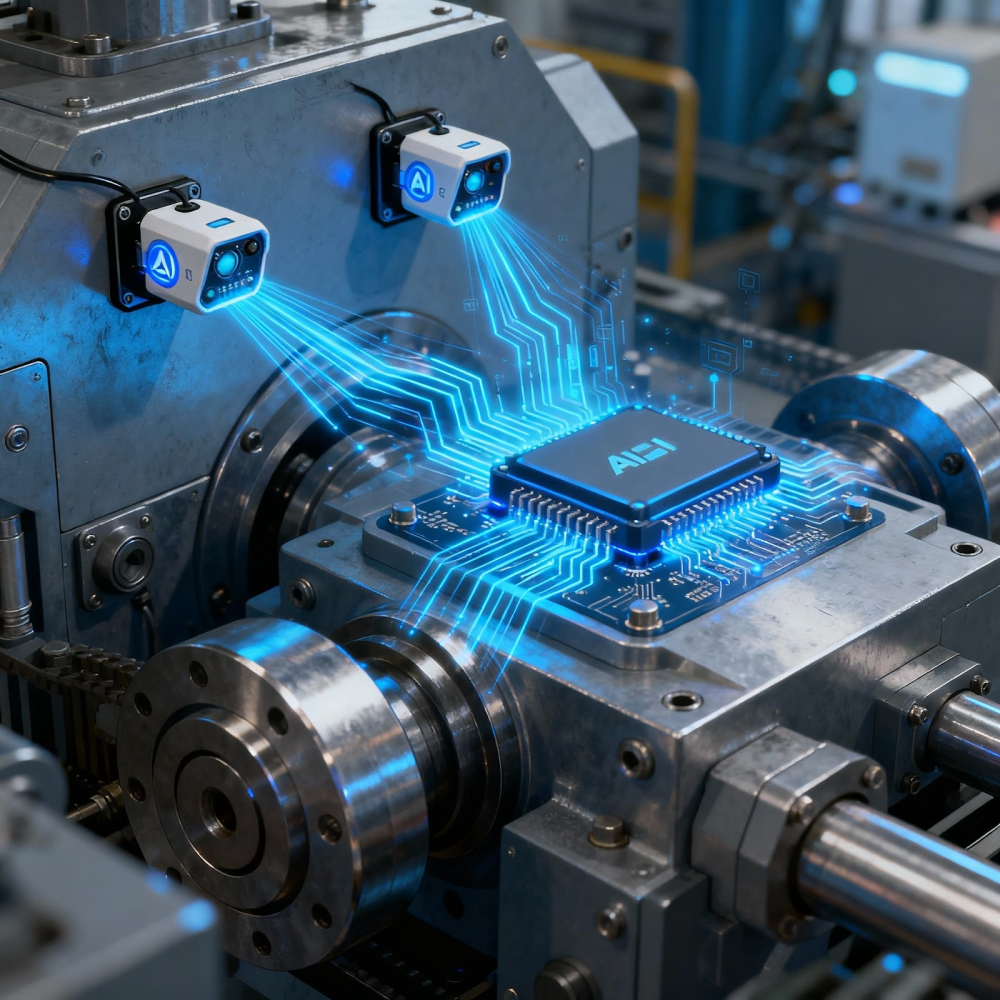
- Sensors: These devices are the sensory organs of the system, acting as the frontline data collectors. They are strategically placed on critical equipment to continuously monitor its physical state in real time. The choice of sensor depends on the specific failure modes being monitored. Key types include:
- Vibration Sensors: Essential for rotating equipment like motors, pumps, and turbines, these sensors can detect issues such as imbalance, misalignment, mechanical looseness, and bearing wear.
- Temperature Sensors and Thermal Imaging: Overheating is often the first sign of a problem. These sensors monitor temperature in motors, bearings, electrical cabinets, and fluid lines to detect friction, poor lubrication, or electrical faults.
- Acoustic and Ultrasonic Sensors: Machines produce distinct sound patterns during normal operation. These sensors can detect changes in these patterns or pick up high-frequency sounds indicative of gas leaks, cavitation in pumps, or electrical arcing.
- Other Sensors: A wide array of other sensors are used for specific applications, including pressure sensors for hydraulic and pneumatic systems, electrical current sensors to monitor motor load, and oil analysis sensors to detect contamination or degradation of lubricants.
- Data Infrastructure and Cloud Platforms: The sheer volume, velocity, and variety of data generated by IIoT sensors constitute "Big Data." This data must be transmitted, stored, and processed efficiently. Cloud platforms (e.g., AWS, Google Cloud, Microsoft Azure) provide the virtually limitless and scalable storage and computational power required to house these massive datasets and train computationally intensive AI models.
- Edge Computing: While the cloud is essential for large-scale data storage and model training, not all data processing needs to happen there. Edge computing involves performing data analysis and even running AI models locally, at or near the data source—on an industrial PC, a gateway, or directly on the machine itself. This approach is critical for applications that demand real-time responses with minimal latency. For example, if a critical anomaly is detected that requires an immediate machine shutdown to prevent catastrophic failure, the decision must be made in milliseconds, a speed that sending data to the cloud and back cannot guarantee. Edge computing also reduces the massive costs associated with transmitting continuous streams of raw sensor data to the cloud and allows critical monitoring to continue even if the connection to the central network is temporarily lost.
Together, these technologies form an integrated ecosystem that enables the seamless flow of information from the physical asset to the analytical model and back, turning raw data into actionable intelligence that drives the future of industrial maintenance.
Section 2: Benefits and Business Value of AI-Driven Predictive Maintenance
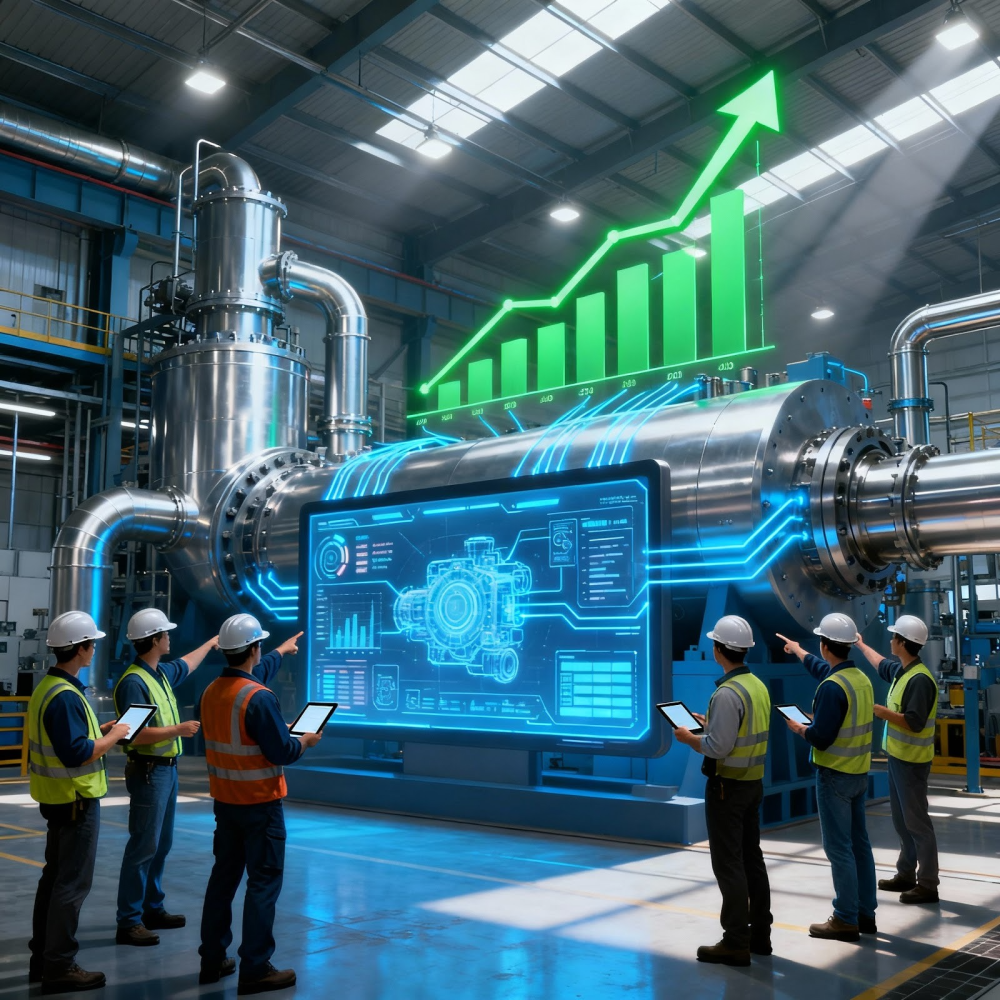
The adoption of AI-powered predictive maintenance is not merely a technological upgrade; it is a strategic business decision that delivers profound and quantifiable value across an organization. By shifting from a reactive or schedule-based mindset to a data-driven, predictive one, companies can unlock significant improvements in operational efficiency, financial performance, and overall resilience. The business case for AI-PdM is built on a foundation of compelling cost savings, enhanced productivity, and strategic risk mitigation.
Transforming Operations: The Core Benefits
The implementation of an intelligent maintenance strategy yields a cascade of benefits that ripple through the entire operational value chain. These advantages are interconnected, creating a virtuous cycle of improvement.
- Drastic Reduction of Unplanned Downtime: This is the most celebrated and impactful benefit of AI-PdM. By forecasting equipment failures with a significant lead time, maintenance interventions can be scheduled during planned production shutdowns or other non-critical periods. This proactive scheduling virtually eliminates the costly and disruptive chaos of unexpected breakdowns. Industry-wide studies and case-specific data consistently show that organizations can reduce unplanned downtime by a staggering 50-70%.
- Significant and Multifaceted Cost Savings: The financial returns from AI-PdM are realized through several key vectors.
- First, the reduction in emergency repairs eliminates the premium costs associated with expedited parts and overtime labor.
- Second, maintenance resources are allocated with precision, ensuring that technicians' time is spent on necessary tasks rather than on routine inspections of healthy equipment or wasteful, premature component replacements.
- Third, by predicting part failures, organizations can optimize their Maintenance, Repair, and Operations (MRO) inventory, reducing carrying costs and avoiding the expense of holding excess or obsolete stock. Across the board, organizations report overall maintenance cost reductions in the range of 18% to 40%.
- Extension of Equipment Lifespan: AI-PdM functions like preventative medicine for industrial assets. By detecting and addressing minor issues—such as slight misalignment, early-stage bearing wear, or insufficient lubrication—before they can escalate, the system prevents the cascading damage that leads to catastrophic failures. This practice of early intervention significantly reduces wear and tear on critical components, thereby extending the total useful life of expensive capital equipment. Reports indicate that asset lifespans can be increased by as much as 20-40%, deferring massive capital expenditures for years.
- Improved Safety and Operational Reliability: A proactive approach to maintenance inherently creates a safer working environment. By systematically identifying and rectifying potential failure points before they manifest, AI-PdM reduces the risk of dangerous equipment malfunctions that could lead to workplace accidents. Furthermore, the predictability afforded by this strategy leads to more stable and reliable operations, enhancing an organization's ability to meet production targets and customer commitments consistently.
It is crucial to recognize that the value of predictive maintenance extends far beyond the maintenance department. While the immediate benefits are framed in terms of reduced repair costs and downtime, the ripple effects create broader operational excellence. The reliability of machinery directly impacts production throughput, product quality, and supply chain predictability. For example, a logistics company that improves equipment availability during its peak season is not just saving on maintenance; it is directly protecting revenue and enhancing customer satisfaction. Similarly, a food manufacturer that increases overall output by 5% through better machine uptime is realizing a direct top-line benefit. Therefore, the true value is a composite figure, combining direct cost savings in maintenance with indirect, but equally significant, gains in productivity, quality, safety, and revenue assurance.
Statistical Insights and ROI
The financial case for AI-driven predictive maintenance is substantiated by extensive research from leading industry analysts and compelling results from early adopters. These figures illustrate a clear and consistent pattern of high returns.
Leading Analyst Findings:
- McKinsey & Company reports that a comprehensive digital reliability and maintenance transformation can increase asset availability by 5-15% and reduce overall maintenance costs by 18-25%. A separate McKinsey analysis highlights the potential to reduce equipment downtime by up to 50% and lower maintenance costs by 10-40%.
- Deloitte estimates that unplanned downtime costs industrial sectors a staggering $50 billion annually. Their research indicates that AI-driven predictive maintenance can deliver a tenfold return on investment (ROI), reduce maintenance costs by up to 25%, and improve equipment uptime by 10-20%.
- General Industry Benchmarks: Across various studies, a consistent picture of transformative impact emerges. Some reports show an average ROI of 385% from PdM adoption, with systems achieving 85% failure prediction accuracy with an 8 to 12-day advance warning window.
Real-World Evidence: Case Studies in Action
The theoretical benefits of AI-PdM are borne out by a growing body of real-world success stories across a diverse range of industries. These case studies demonstrate not only the financial returns but also the massive scale of data operations required to achieve them. The magnitude of the business value is often directly proportional to an organization's ability to manage and analyze data at scale.
Manufacturing (Automotive):
- General Motors (GM) implemented a PdM solution using IIoT sensors and AI to monitor its fleet of assembly line robots. The system successfully predicted over 70% of equipment failures at least 24 hours in advance, leading to a 15% reduction in unexpected downtime and annual savings of $20 million.
- Ford leveraged machine learning on data from connected vehicle modems to predict failures in fuel injection equipment (FIE). The model was able to predict 22% of these specific failures an average of 10 days in advance. This capability was estimated to save over 122,000 hours of vehicle downtime, translating to a potential $7 million in savings for that single component alone.
- Another major automotive manufacturer deployed a system across its production lines monitoring over 10,000 sensors. It achieved 95% prediction accuracy, resulting in a 35% reduction in unplanned downtime and $2.3 million in annual savings.
Manufacturing (Food & Beverage):
- Frito-Lay successfully implemented a predictive system that limited its unplanned disruptions to just 2.88% of operating time, notably preventing the failure of a critical PC combustion blower motor that could have halted potato chip production.
- A global food manufacturer deployed an AI platform to eliminate unplanned machine outages, recovering an estimated $500,000 in lost productivity per week and increasing overall output by 5%.
Energy and Utilities:
- Shell has deployed one of the largest-scale PdM systems, using AI to oversee more than 10,000 critical assets like pumps and compressors. The system ingests over 20 billion rows of data each week from 3 million sensors and runs over 11,000 machine learning models continuously to generate 15 million predictive insights daily, allowing the company to mitigate significant operational, safety, and environmental risks.
- ENGIE, a global energy company, is using Amazon SageMaker to develop and deploy over 1,000 prediction models for equipment such as valves, pumps, and heating systems. The project aims to connect 10,000 pieces of equipment within five years, with estimated annual savings of €800,000.
- Duke Energy reported a reduction in unplanned outages of over 20% after implementing a PdM program across its power generation facilities, focusing on critical turbines and generators.
Transportation and Logistics:
- A 250-vehicle transportation fleet implemented an AI-driven predictive analytics solution that resulted in a 45% reduction in downtime incidents, a 30% reduction in maintenance costs, and an impressive 220% ROI within the first year.
- A Deloitte case study of a logistics company highlights how implementing IoT sensors and AI analytics on its material handling equipment led to a 40% reduction in maintenance costs and a 60% improvement in equipment availability during peak shipping seasons, directly impacting their ability to meet customer demand.
The following table consolidates these impressive results, providing a clear, data-driven snapshot of the value generated by AI-powered predictive maintenance across industries.
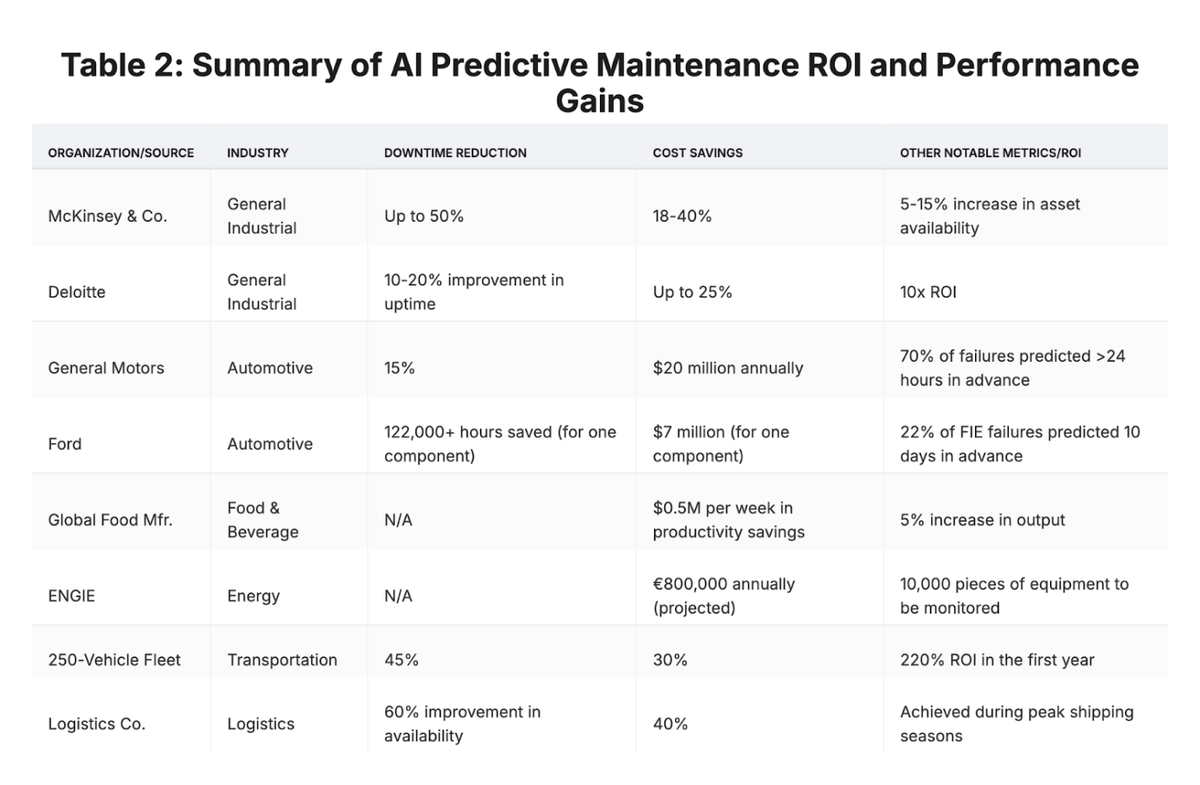
These figures and case studies collectively paint an unambiguous picture: AI-powered predictive maintenance is not an experimental technology but a proven, high-impact strategy for driving substantial and sustainable business value.
Section 3: Practical Implementation of AI Predictive Maintenance
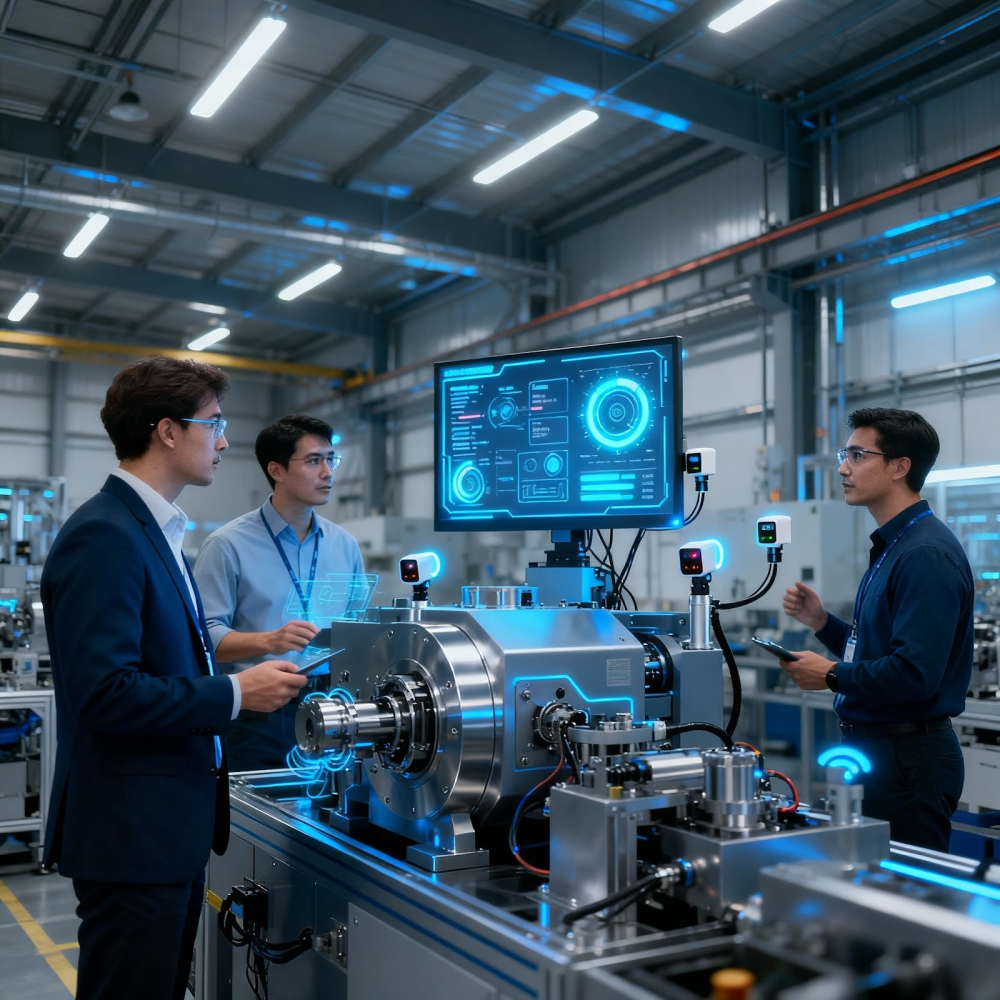
Successfully implementing an AI-powered predictive maintenance program is a strategic transformation, not merely a technology installation. It requires a holistic, phased approach that gives equal weight to technology, data, and people. Organizations that treat it as a pure IT project often fail, as the most significant barriers are frequently organizational and cultural rather than technical. A successful implementation journey can be structured into five distinct, yet interconnected, phases.
Phase 1: Assessment and Strategy (The Foundation)
Before any technology is deployed, a clear strategic foundation must be laid. This phase is about understanding the current state, defining the desired future state, and charting a clear path between them.
- Evaluate Current Maintenance Practices: The first step is a thorough audit of existing maintenance operations. This involves analyzing historical maintenance logs from the CMMS, downtime records, and repair cost data to establish a quantitative baseline. This analysis will reveal current performance levels (e.g., Mean Time Between Failures - MTBF), identify the most frequent failure modes, and quantify the true cost of the existing maintenance strategy.
- Identify Critical Assets and Set Goals: It is neither feasible nor cost-effective to apply predictive maintenance to every piece of equipment. The focus must be on assets where the impact of failure is greatest, either due to high repair costs, significant production bottlenecks, or safety implications. Once these critical assets are prioritized, specific, measurable, achievable, relevant, and time-bound (SMART) goals should be established. These Key Performance Indicators (KPIs) move beyond vague objectives to concrete targets, such as "reduce unplanned downtime on the primary stamping press by 30% within 18 months" or "increase the MTBF for critical cooling pumps by 50%".
Phase 2: Data and Technology Infrastructure (The Plumbing)
With a clear strategy in place, the focus shifts to building the technological backbone of the PdM system. This phase is about ensuring a reliable flow of high-quality data from the assets to the analytical engine.
- Sensor Deployment and Data Acquisition: Based on the failure modes of the prioritized critical assets, the appropriate suite of IIoT sensors must be selected and installed. A detailed data acquisition plan is essential, specifying sensor placement, data sampling frequencies, and communication protocols to ensure that data is collected consistently and reliably.
- Building the Data Backbone: The vast streams of data from sensors, alongside historical maintenance logs and operational data from other systems (like MES or SCADA), need a centralized home. This is typically a cloud-based data lake or lakehouse, which provides the necessary scalability for storage and processing. Crucially, this is where data quality is enforced. Robust data pipelines must be built to perform essential preprocessing steps: cleaning to remove noise and outliers, normalizing to standardize different data formats, and validating to handle missing or erroneous entries.
Phase 3: AI Model Development and Deployment (The Brains)
This phase involves transforming the prepared data into predictive intelligence. It is an iterative cycle of building, testing, and refining the machine learning models that form the core of the PdM system.
- Algorithm Selection and Training: Data scientists and reliability engineers collaborate to select the most appropriate ML algorithms for the task. This choice depends on the nature of the data and the desired output—for example, using classification models for fault detection or deep learning models like LSTMs for RUL estimation on time-series data. The selected algorithms are then trained on the historical and sensor data, an iterative process of feeding the model data, evaluating its predictions, and tuning its parameters to improve accuracy.
- The Critical Role of the Pilot Program: Before committing to a full-scale, facility-wide rollout, it is imperative to deploy the trained model in a limited, controlled pilot project. This pilot should target a small group of the critical assets identified in Phase 1. The pilot serves multiple strategic purposes. Technically, it validates the model's accuracy and the reliability of the entire technology stack in a real-world environment. Financially, it provides a contained, low-risk opportunity to demonstrate tangible ROI, generating the hard data needed to justify further investment. Critically, the pilot also functions as a powerful change management tool. By involving a select group of technicians and operators as "early adopters," it creates internal champions who can attest to the system's benefits and help overcome skepticism among their peers, building crucial ground-level support for the broader initiative.
- Scaling Up: The success and lessons learned from the pilot form the blueprint for a phased, enterprise-wide rollout. This involves methodically expanding the solution to additional assets, production lines, and facilities, refining the models and processes at each stage.
Phase 4: Integration and Workflow (The Nervous System)
An AI model that generates alerts in isolation is of little practical value. To be effective, the predictive insights must be seamlessly integrated into the organization's existing operational workflows and enterprise systems. This "closing the loop" from insight to action is often the most technically complex phase.
- Integration with CMMS: The most critical integration is with the Computerized Maintenance Management System or Enterprise Asset Management system. When the AI model predicts an impending failure and generates an alert, that alert should automatically trigger a work order in the CMMS/EAM, complete with diagnostic information, recommended actions, and a priority level. This transforms a predictive insight into an actionable task assigned to the right technician.
- Integration with ERP: Connecting the PdM system to the Enterprise Resource Planning (ERP) system automates crucial logistical and financial processes. For instance, an automated work order for a predicted bearing failure can trigger a check of the ERP's inventory module for the required spare part. If the part is not in stock, a purchase request can be automatically generated. This ensures that parts and resources are available when the maintenance is scheduled, preventing delays. It also allows for precise tracking of maintenance costs, tying specific interventions back to financial records.
- Overcoming Integration Challenges: This process is fraught with difficulty. Different systems often use different data formats, database schemas, and terminology. Common challenges include data standardization issues, asset hierarchy misalignment (how an asset is defined in the CMMS vs. the ERP), and inadequate or inflexible Application Programming Interfaces (APIs). Overcoming these barriers requires meticulous planning, the potential use of middleware platforms to translate data between systems, and establishing a clear data governance policy that defines a single "source of truth" for master data like asset IDs and parts lists.
Phase 5: People and Process (The Culture)
Technology, data, and systems integration form the technical foundation of a PdM program, but its ultimate success hinges on the people who must use it. Underestimating the human element is the single most common reason for failure. Research shows that organizational resistance and skills gaps affect up to 70% of implementations, and companies that underinvest in change management experience significantly higher failure rates. A successful program requires a deliberate and well-resourced effort to transform the organizational culture.
- Comprehensive Change Management: Adopting AI-PdM is a fundamental shift from "how we've always done it." This change can be met with skepticism from seasoned technicians who trust their experience over an algorithm, or fear from staff who see automation as a threat to their job security. A structured change management framework, such as Kotter's 8-Step Model or the ADKAR model, is essential to navigate this transition. Key activities include:
- Securing and Demonstrating Leadership Support: Change must be championed from the top down.
- Communicating a Clear Vision: Articulate not just what is changing, but why. Emphasize that the goal is to augment and empower technicians—making their jobs safer, more strategic, and less chaotic—not to replace them.
- Involving Employees Early: Engage maintenance teams in the process, from asset selection to pilot feedback. This fosters a sense of ownership and turns potential resistors into advocates.
- Workforce Training and Skill Development: A significant skills gap often exists between traditional maintenance expertise and the data literacy required by a PdM environment. A multi-pronged training strategy is necessary to bridge this gap. Addressing talent shortages and upskilling is crucial for long-term adoption, as discussed in “AI Talent Landscape 2025: Sourcing, Solving Shortage and Building for the Future”
- Technical Training: Data scientists, IT staff, and reliability engineers need specialized training on the AI platforms, machine learning models, and data infrastructure being used. This can be achieved through dedicated courses and certifications.
- Operational Training: Maintenance technicians and their supervisors require hands-on training focused on the practical application of the new system. This includes learning how to interpret predictive alerts on their mobile devices or dashboards, understanding the data behind the recommendations, and adapting their workflows from a time-based to a condition-based schedule.
- Building a Cross-Functional Team: A successful PdM initiative is not owned by a single department. It requires a dedicated, cross-functional team comprising data scientists, IT professionals, reliability engineers, and, crucially, experienced maintenance technicians who bring invaluable domain knowledge about the equipment and its failure modes. This fusion of data science and hands-on expertise is the key to building a truly effective and trusted system.
Section 4: Advanced Capabilities and Future Trends

The journey of maintenance transformation does not end with the implementation of predictive models. The same foundational technologies—AI, IoT, and advanced computing—are paving the way for even more intelligent, automated, and intuitive capabilities. These emerging trends are pushing the boundaries of what is possible, moving from merely predicting failures to actively prescribing optimal solutions, decentralizing intelligence to the machine itself, and creating a seamless, augmented interface between human operators and their digital counterparts.
From Prediction to Prescription
The logical and most powerful evolution of predictive maintenance is prescriptive maintenance (PsM). While PdM answers the question, "When is this asset likely to fail?", PsM answers the more critical follow-up question: "What is the best possible action to take right now?".
A prescriptive maintenance system leverages AI to go beyond a simple failure alert. It analyzes the predictive insight within a broader operational and business context, considering factors like current production schedules, spare parts inventory levels, labor availability, and the financial impact of different intervention options. For example, instead of simply issuing an alert that a pump bearing has a 90% probability of failure within the next 72 hours, a prescriptive system might generate a recommendation like: "Reduce pump operating speed by 15% to extend its remaining useful life by an additional 48 hours. This will allow it to complete the current high-priority production run and align the repair with the scheduled plant-wide maintenance shutdown this weekend, avoiding a costly mid-week interruption. A work order has been created, and the required bearing has been reserved in the ERP system.". This level of intelligence transforms the maintenance function from a reactive service department into a dynamic, real-time optimization engine for the entire operation.
Decentralizing Intelligence with Edge AI
The conventional architecture for AI-PdM involves sending vast streams of sensor data to a centralized cloud for processing. However, this model introduces latency—the delay caused by data transmission and processing—which can be unacceptable for mission-critical equipment where a failure can escalate in seconds. Furthermore, the costs of transmitting and storing continuous high-frequency data from thousands of sensors can be prohibitive.
Edge AI provides a solution by decentralizing intelligence. It involves deploying and running machine learning models directly on computing devices located at the "edge" of the network—on or near the industrial equipment itself. This approach offers several transformative benefits:
- Real-Time Response: By analyzing data at the source, Edge AI can detect anomalies and trigger immediate actions (e.g., shutting down a machine) in milliseconds, without waiting for a round trip to the cloud. This is essential for preventing catastrophic failures and ensuring safety.
- Reduced Network Load and Cost: Edge devices can preprocess data locally, filtering out noise and sending only relevant insights or summaries to the cloud. This drastically reduces network bandwidth requirements and cloud storage costs.
- Enhanced Reliability and Security: Edge AI systems can continue to operate and protect assets even if the connection to the central cloud is lost. By keeping sensitive operational data on-premises, it also strengthens data security and privacy.
The Rise of Intuitive Human-Machine Interfaces
For AI-driven insights to be effective, they must be delivered to frontline workers in a way that is intuitive, actionable, and seamlessly integrated into their workflow. The future of maintenance interfaces is moving beyond traditional dashboards on a desktop computer to more immersive and natural forms of interaction.
- Voice Recognition and AI Assistants: Hands-free operation is a major advantage for technicians who are often working in complex, noisy, or hazardous environments. Voice-enabled AI assistants allow technicians to use natural language commands to report issues, access technical manuals, retrieve work order details, or ask for diagnostic guidance without having to put down their tools or remove safety gloves. To explore how voice-based interfaces are becoming an essential operating system for business productivity, see The End of Typing: Why Voice is the New OS for Business Productivity. A technician could simply say, "Co-pilot, show me the procedure for replacing the main hydraulic filter on this press," and receive an immediate response.
- AR Technology: AR technology overlays digital information directly onto a technician's real-world view, typically through smart glasses or a tablet. This creates a powerful, context-aware experience. For example, a technician looking at a complex electrical panel could see real-time voltage readings from IoT sensors displayed next to each circuit, or see animated, step-by-step instructions for a repair procedure overlaid directly onto the machine's components. AR also enables powerful "see-what-I-see" remote assistance, where an off-site expert can view the technician's live feed and provide guidance by drawing digital annotations that appear anchored to the physical equipment.
- Natural Language Interfaces for Data Analysis: For managers and analysts, the future involves moving beyond complex BI tools and dashboards. Natural Language Interfaces will allow users to query vast industrial datasets using simple, conversational language. A plant manager could ask, "What was the leading cause of downtime across all our CNC machines last quarter?" or "Compare the energy consumption of the assembly lines at the Detroit and Houston plants," and receive an immediate, data-backed answer.
The convergence of these technologies—Edge AI for real-time detection, Prescriptive AI for optimized decision-making, and AR/Voice for intuitive human action—paints a clear picture of the future maintenance workflow. It is a seamless, highly efficient loop where intelligence is decentralized, decisions are optimized, and human operators are augmented with the precise information they need, exactly when and where they need it.
Ensuring Long-Term Accuracy: Continuous AI Model Improvement
An AI model is not a static asset. Its predictive accuracy can degrade over time as equipment ages, operating parameters shift, new types of raw materials are introduced, or novel failure modes emerge. This phenomenon, known as "model drift," occurs because the real-world data distribution changes, while the model was trained on a fixed, historical dataset.
To combat this, the future of AI-PdM lies in continuous learning, also known as online learning. Unlike traditional batch learning, which requires periodically retraining the entire model from scratch on a new, massive dataset—a costly and time-consuming process—continuous learning allows the model to adapt and update itself incrementally as new data streams in. This approach ensures that the model remains relevant and accurate in a dynamic operational environment, mitigating the risk of "catastrophic forgetting," where a model retrained on new data loses the knowledge it had gained from older data.
This capability creates a powerful, self-improving system. A more accurate model leads to better maintenance decisions, which in turn leads to more efficient operations, generating more high-quality data that can be used to further refine the model. This virtuous cycle forms a significant competitive moat. An organization with a mature, continuously learning PdM system possesses a predictive asset that is uniquely tuned to its specific machines and operational context. This is an advantage that a competitor cannot easily replicate, as they lack the years of accumulated, model-refined operational data that fuels the system's ever-increasing intelligence.
Expanding the Scope of AI in Operations
The intelligence generated for predictive maintenance can be leveraged to optimize adjacent operational functions, creating even greater enterprise-wide value.
- AI for MRO Inventory Optimization: Predictive maintenance provides a highly accurate forecast of which spare parts will be needed and when. AI algorithms can use this information to optimize MRO inventory levels, ensuring that critical spares are always available to meet predicted demand while simultaneously identifying and eliminating excess, slow-moving, or obsolete stock. This data-driven approach minimizes inventory holding costs and prevents delays caused by stockouts.
- AI for Root Cause Analysis (RCA): While PdM excels at predicting individual component failures, AI can also be used to perform systemic Root Cause Analysis. By analyzing patterns across multiple failure events, different machines, and even entire fleets of assets, AI can identify the underlying, often hidden, root causes of recurring problems—be it a flawed operational procedure, a faulty component from a specific supplier, or an adverse environmental factor. This allows the organization to move beyond fixing individual symptoms to eliminating entire classes of failures at their source.
Conclusion
The era of reactive, crisis-driven maintenance is drawing to a close.
Artificial intelligence is not merely an incremental improvement upon traditional methods; it represents a fundamental transformation, fundamentally reshaping the role and value of maintenance within the industrial enterprise. The evidence is clear and compelling: AI-powered predictive maintenance marks the definitive shift from a necessary but costly operational function to an intelligent, proactive, and strategic driver of business value. By leveraging real-time data and sophisticated machine learning models, organizations can now foresee and prevent equipment failures, unlocking unprecedented levels of efficiency, reliability, and safety.
The strategic advantage for organizations that embrace this transformation today is significant and sustainable. They are not simply cutting maintenance budgets or reducing downtime; they are building more resilient and competitive operations from the ground up. The ability to maximize asset availability, extend equipment lifespan, optimize resource allocation, and create a safer working environment provides a powerful competitive moat in an increasingly demanding global market. The case studies and data presented in this report demonstrate that the returns are not speculative but proven, with leading companies across manufacturing, energy, and transportation realizing substantial cost savings and productivity gains.
The path to implementation, while complex, is clear. It requires a holistic and strategic commitment that balances technology, data infrastructure, and, most importantly, people and culture. The journey should not be a "big bang" overhaul but a measured, phased approach. The most effective way to begin is to move beyond theoretical consideration to practical action. A thorough assessment of current maintenance practices, coupled with the identification of a high-impact, well-defined pilot project, provides the ideal starting point for an organization's AI transformation journey. This initial step will build momentum, demonstrate value, and lay the foundation for a future where operational excellence is not just a goal, but a data-driven reality.
This leaves every industrial leader with a critical, forward-looking question: How ready is your organization to prevent equipment failure before it happens with AI?
Embarking on this journey can seem daunting, but you don't have to navigate it alone. For organizations ready to take the next step and build a truly resilient, data-driven operation, expert guidance is key.
Discover how Alpha Technical Solutions can help you unlock proactive machine health through AI transformation — visit our website to learn more and book a complementary strategy call.