Introduction: The Last Mile of the Paperless Factory
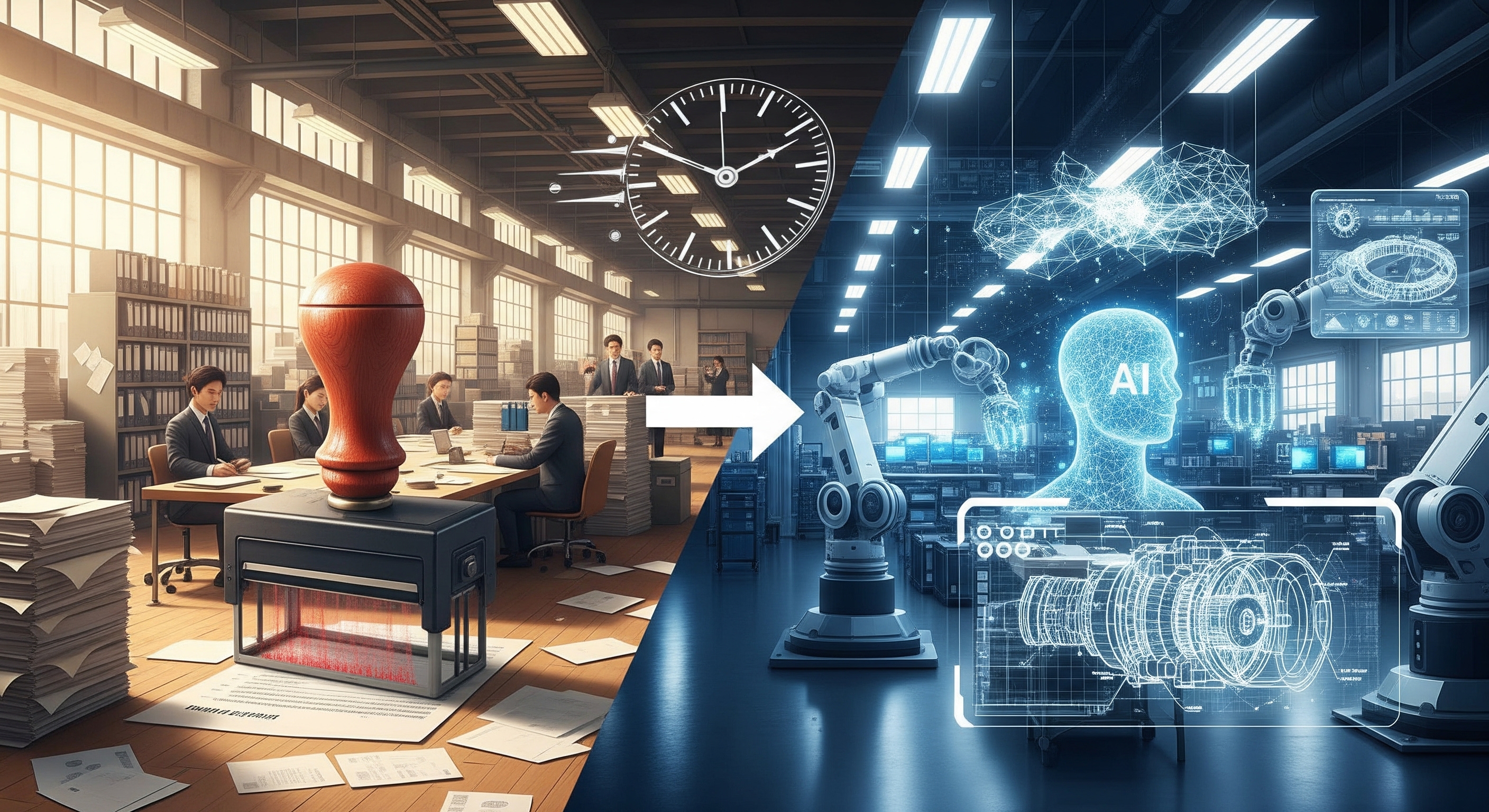
The pursuit of the paperless factory has been a central tenet of industrial strategy for over three decades, yet the reality on the plant floor often remains stubbornly analog. This phenomenon, frequently described as the documentation paradox, suggests that while the shift toward digitization is an absolute necessity for modern manufacturing efficiency, the actual implementation often introduces a secondary layer of complexity that can paradoxically lower productivity. Paper documents continue to serve as a "security blanket" for frontline workers because they fit the high-friction, oily, and chaotic environment of the industrial workspace in a way that rigid desktop terminals do not.
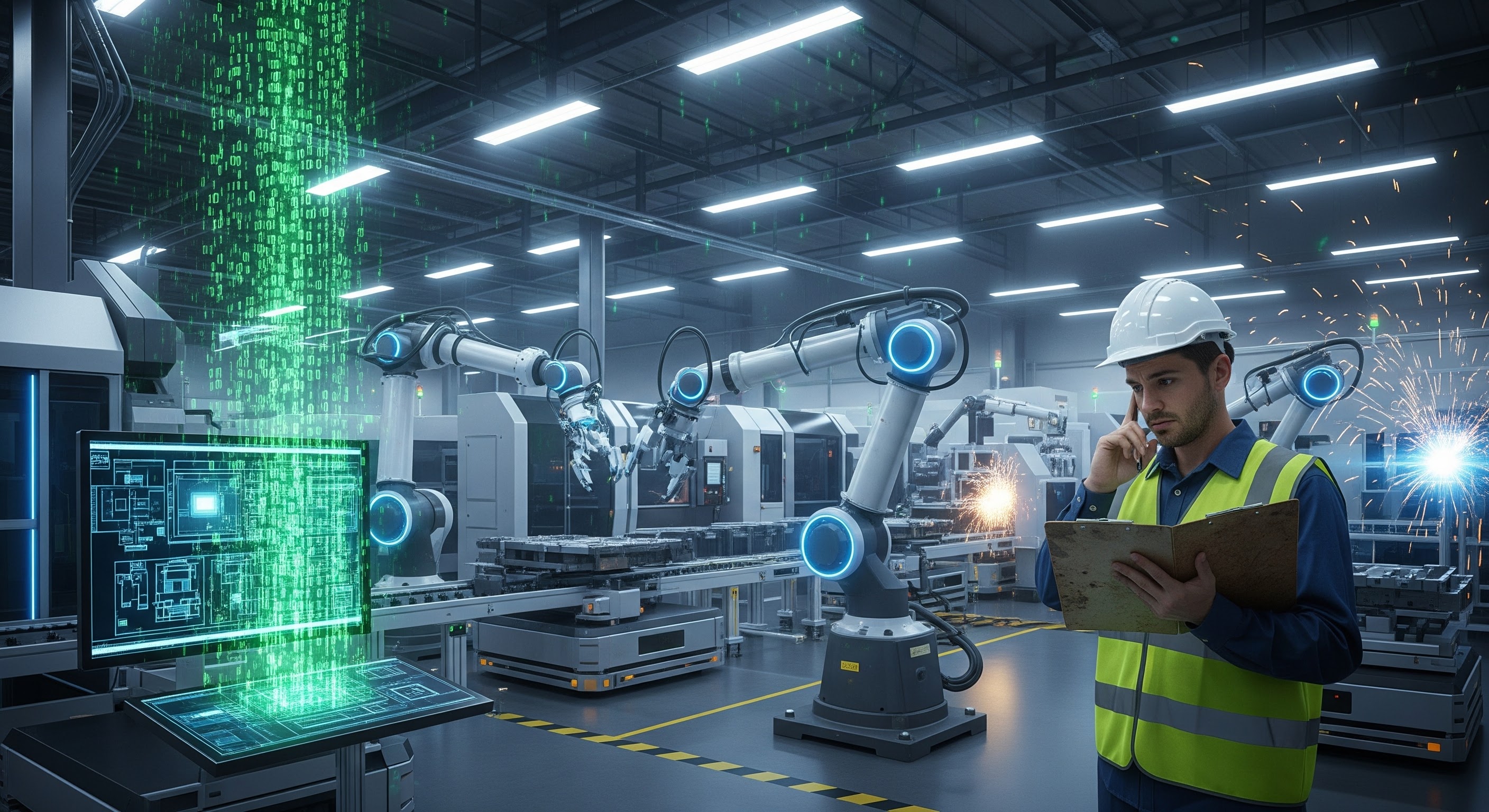
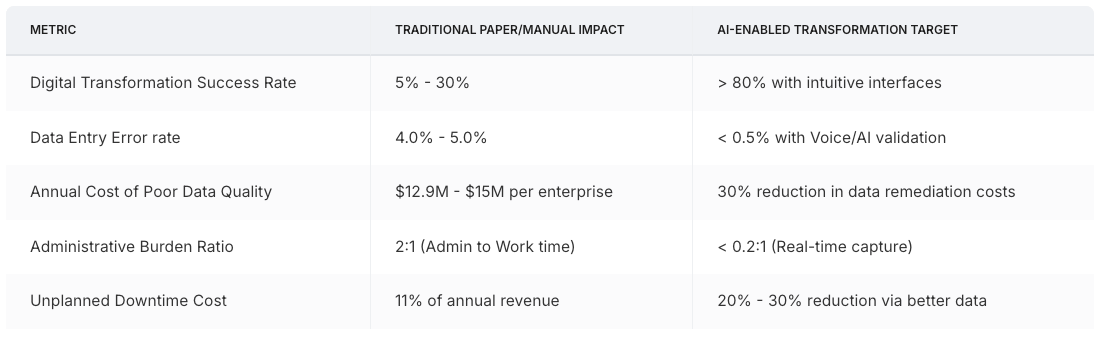
The failure of digital transformation initiatives to bridge this gap is well-documented, with research suggesting that between 70% and 95% of such projects fail to meet their primary objectives. These failures are rarely the result of a single technical flaw but are instead the cumulative impact of systemic issues: data silos, poor user interfaces, and a general lack of integration between the shop floor and the enterprise management layer. When a technician is forced to leave the "point of repair" to find a terminal, the result is "data debt." Estimates suggest that up to 40% of critical maintenance data goes unrecorded or is entered incorrectly due to the friction of traditional interfaces.
To resolve this, the industrial sector must address the "last mile" of data collection.Voice-to-Work-Order (V2WO) technology has emerged as the most viable solution, offering a hands-free, eyes-up interface that allows for real-time data capture at the moment of action. By transforming the shop floor into a conversational environment, organizations can eliminate the administrative bottleneck, ensuring that the frontline is no longer tethered to clipboards.
Breaking the Administrative Bottleneck: Why Voice, Why Now?
The urgency driving the adoption of voice-based AI is fueled by a demographic crisis of unprecedented scale. The Silver Tsunami, or the "Great Retirement," is currently hollowing out the industrial workforce, with over 52% of employees in the sector expected to retire or leave within the next five years. This is not merely a loss of headcount; it is a catastrophic drain of specialized expertise.
The Demographic Crisis and the Mentorship Vacuum
The industrial sector is particularly vulnerable because of the "Hollow Middle"—a missing generation of mid-career mentors caused by hiring freezes during previous industrial downturns. As the "Old Guard" retires, they are being replaced by Gen Z workers who are tech-savvy but lack the deep operational intuition of their predecessors. This creates a vacuum where fewer experienced workers are available to train new hires.
When this tribal knowledge is not captured, the financial consequences are staggering. In one case study, an aerospace parts manufacturer lost $2.3 million in just four months when a senior machinist retired without a formal knowledge transfer. His replacement was unaware of undocumented machine quirks, leading to rejected parts and massive rework costs. Voice-activated AI provides a mechanism to capture this knowledge "in flow" without requiring veterans to write manuals—a task they rarely have time for.
Redefining Reliability through Precision Metrics
Beyond knowledge retention, voice AI addresses the structural flaws in maintenance reporting. The Mean Time To Repair (MTTR) is traditionally calculated as:


However, in many facilities, these timestamps are recorded hours after the event, leading to "metric drift." Inaccurate time logging makes it impossible to distinguish between a complex repair and a simple administrative delay. Similarly, the Mean Time Between Failures (MTBF) becomes corrupted when minor faults are under-reported due to the effort required to log them.

The Engine Under the Hood: Architectural Requirements
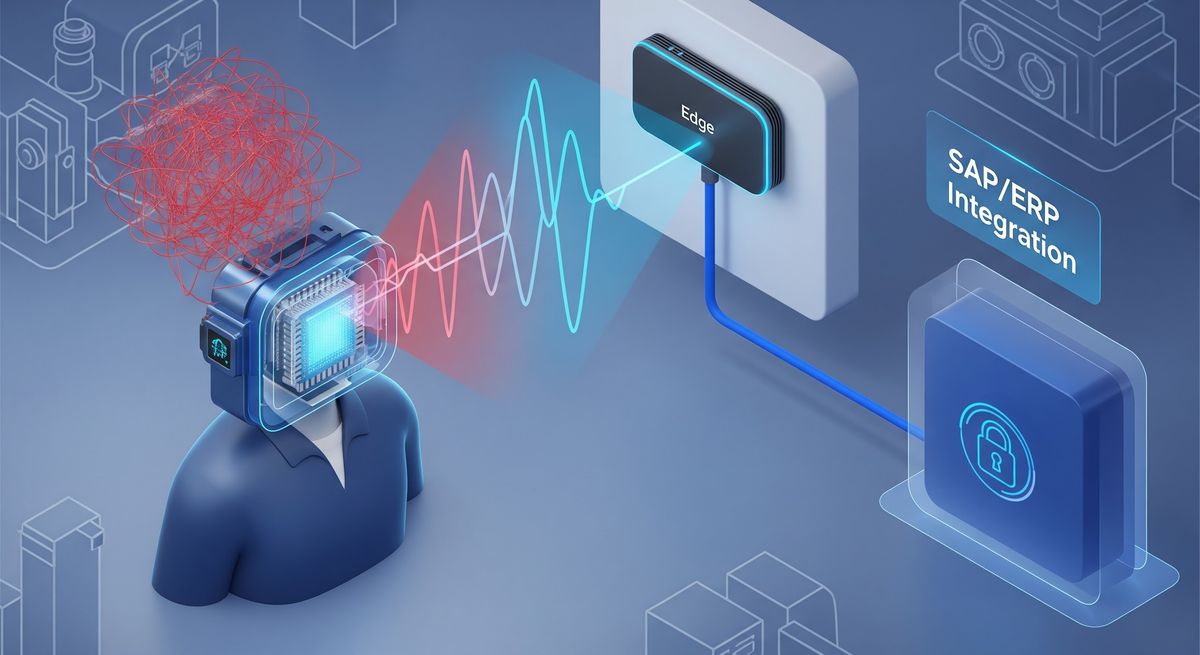
An industrial environment is defined by acoustic chaos and proprietary jargon. Building an effective system requires moving beyond consumer-grade assistants and focusing on a Natural Language Understanding (NLU) model trained on a custom dictionary of asset tags and technical terminology.
The Edge-Cloud Dilemma: Speed vs. Scale
The architectural placement of AI processing is a critical decision. Edge AI is prioritized for real-time tasks. By processing audio locally on a wearable device, the system can provide sub-50 ms response times. This is essential for safety-critical applications, such as lockout-tagout procedures, where a network delay could have catastrophic results. Edge systems also offer superior data privacy and allow technicians to continue recording work orders even in "dead zones" where Wi-Fi is unavailable.
Conversely, the cloud is utilized for heavy-duty historical trend analysis and the retraining of machine learning models. A modern reasoning engine often employs Retrieval-Augmented Generation (RAG), which allows the AI to "consult" the factory’s unstructured data—such as scanned equipment manuals and historical repair logs—to provide intelligent, context-aware guidance.
Deep Enterprise Integration
A voice-to-work-order system is only as valuable as the data it can write to the enterprise "system of record." For most industrial leaders, this means a bidirectional sync with SAP Plant Maintenance (PM). Traditional SAP interfaces are complex and transaction-code heavy, which often leads to "dark data" (work done but never logged).
By using a conversational wrapper, a technician’s voice command can trigger a sequence of complex background transactions. For example, stating "Consumed one belt (Part #998)" can automatically log labor hours and trigger a "Goods Issue" in the ERP to deduct the part from inventory. This seamless loop ensures that inventory records remain accurate and maintenance histories are complete without the worker ever touching a keyboard.
Overcoming the Adoption Chasm: Change Management
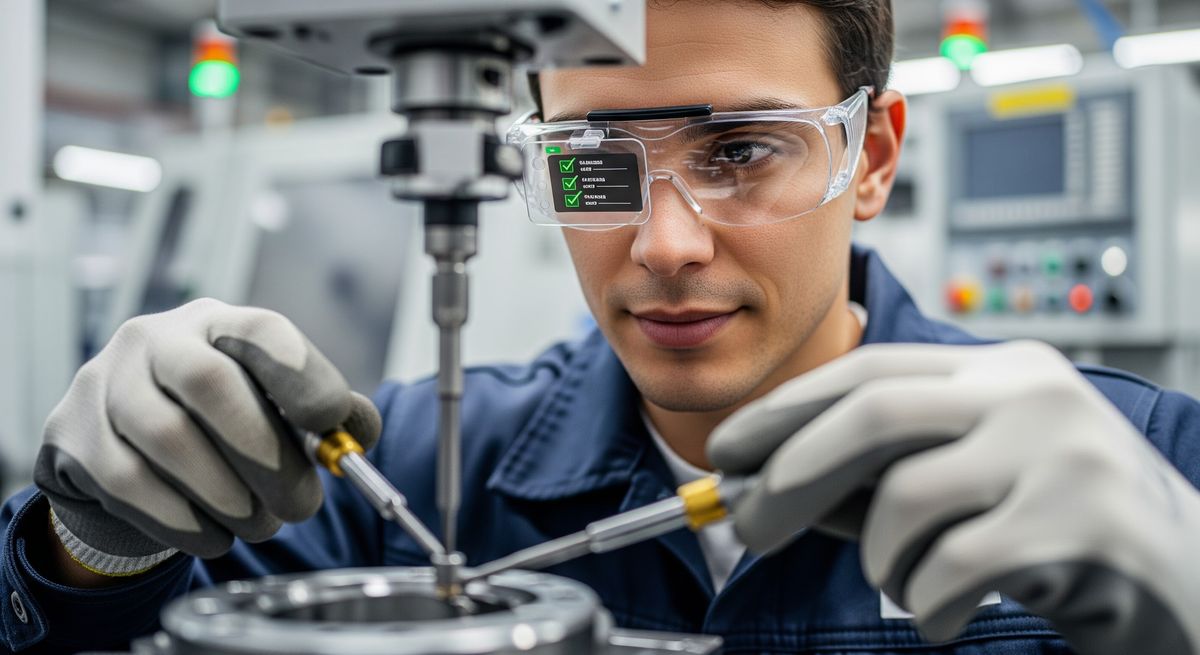
The transition to a conversational floor is as much a cultural challenge as a technical one. Successful implementations often utilize assisted reality tools—wearable headsets that provide visual and audio prompts without obstructing the worker's view.
Building Trust through Human-in-the-Loop Design
Technicians are often wary of "black box" AI. To overcome this, organizations should frame the technology as a "Digital Copilot" that reduces administrative burden rather than a replacement for mechanical skill. When a worker sees that a 30-second voice dictation can generate a flawless Root Cause Analysis report, their resistance turns to advocacy. This shift delivers a significant productivity payoff by cutting information search time by up to 90% and reducing human-error-related costs by 25% to 50%.
Standardizing for the Next Generation
The incoming workforce lacks the "mechanical intuition" of retiring experts. Voice-led systems bridge this gap by providing standardized guidance that reduces the cognitive load on new hires. By allowing hands-free operation, technicians can receive real-time instructions while their hands remain on the tools. This "in-flow" training can reduce onboarding time by as much as 72%, transforming a novice into a productive team member in weeks rather than months.
Conclusion: The Future of the Conversational Shop Floor
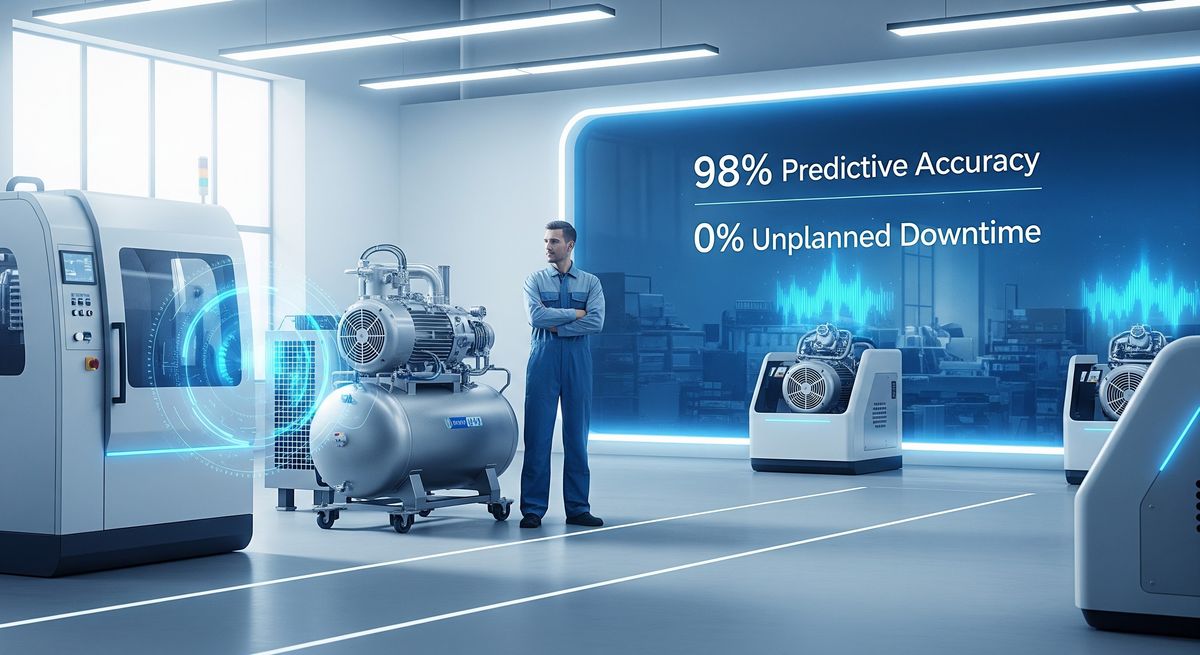
The integration of voice-to-work-order systems marks the end of the "Dark Age" of industrial documentation. To achieve high accuracy in these settings, companies must deploy noise-resilient AI capable of filtering out ambient machine noise up to 100 decibels.
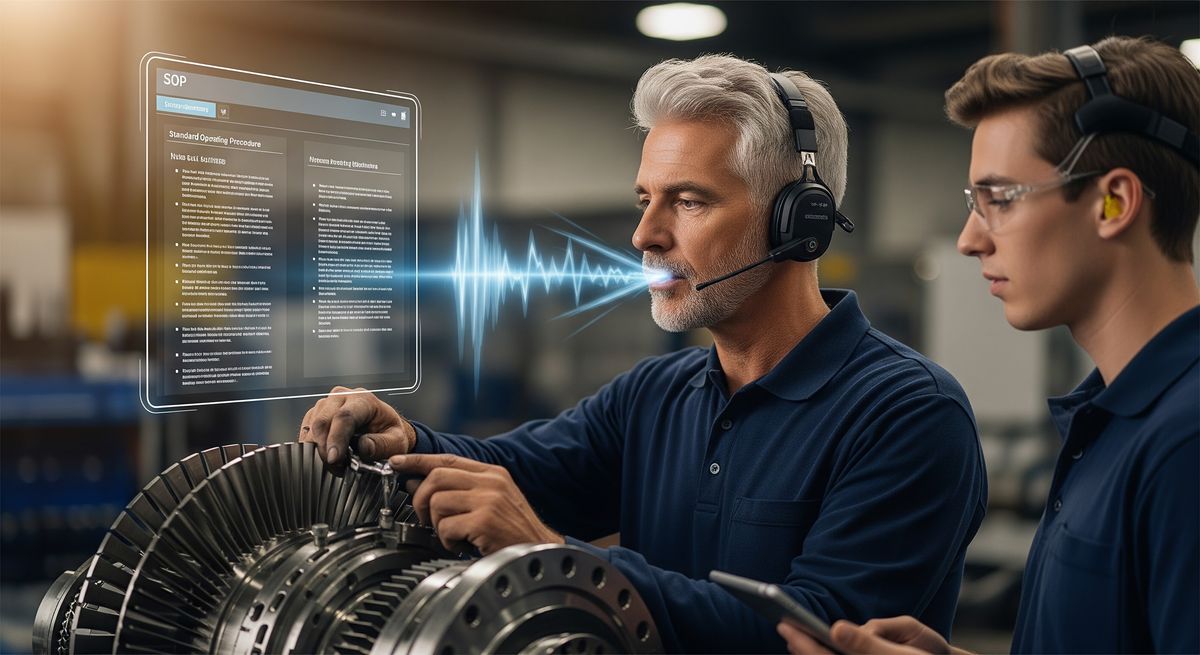
As the technology matures, we will see a shift from reactive data entry to proactive dialogue. Technicians will no longer just report what happened; they will ask the machine (via AI), "When was this bearing last greased?" and receive an immediate answer. Generative AI will continue to evolve, turning messy spoken jargon into structured Standard Operating Procedures (SOPs) automatically.
The transition toward a conversational shop floor is not merely a technical upgrade; it is a strategic repositioning of the workforce as the primary driver of a factory's digital intelligence. By
as a critical data asset, organizations can build a competitive moat powered by more accurate
models and a culture of continuous improvement. For leaders ready to audit their current "Data-to-Desk" friction and navigate the
required for this journey,
through these new tools is the next step. Partner with the specialists at
to transform your frontline operations and ensure your company’s tribal knowledge is preserved for the next generation.