Agentic AIAI Ethics
Enterprise Autonomous AI (Agents): How to deploy, govern, and prevent blowups | The OpenClaw playbook
JRJonathan Rudich
•
OpenClaw’s 160k+ star agentic OS unlocks autonomous work and 70% cost savings, but raises root-level security risk—govern with isolation, policy-as-code, and HITL.
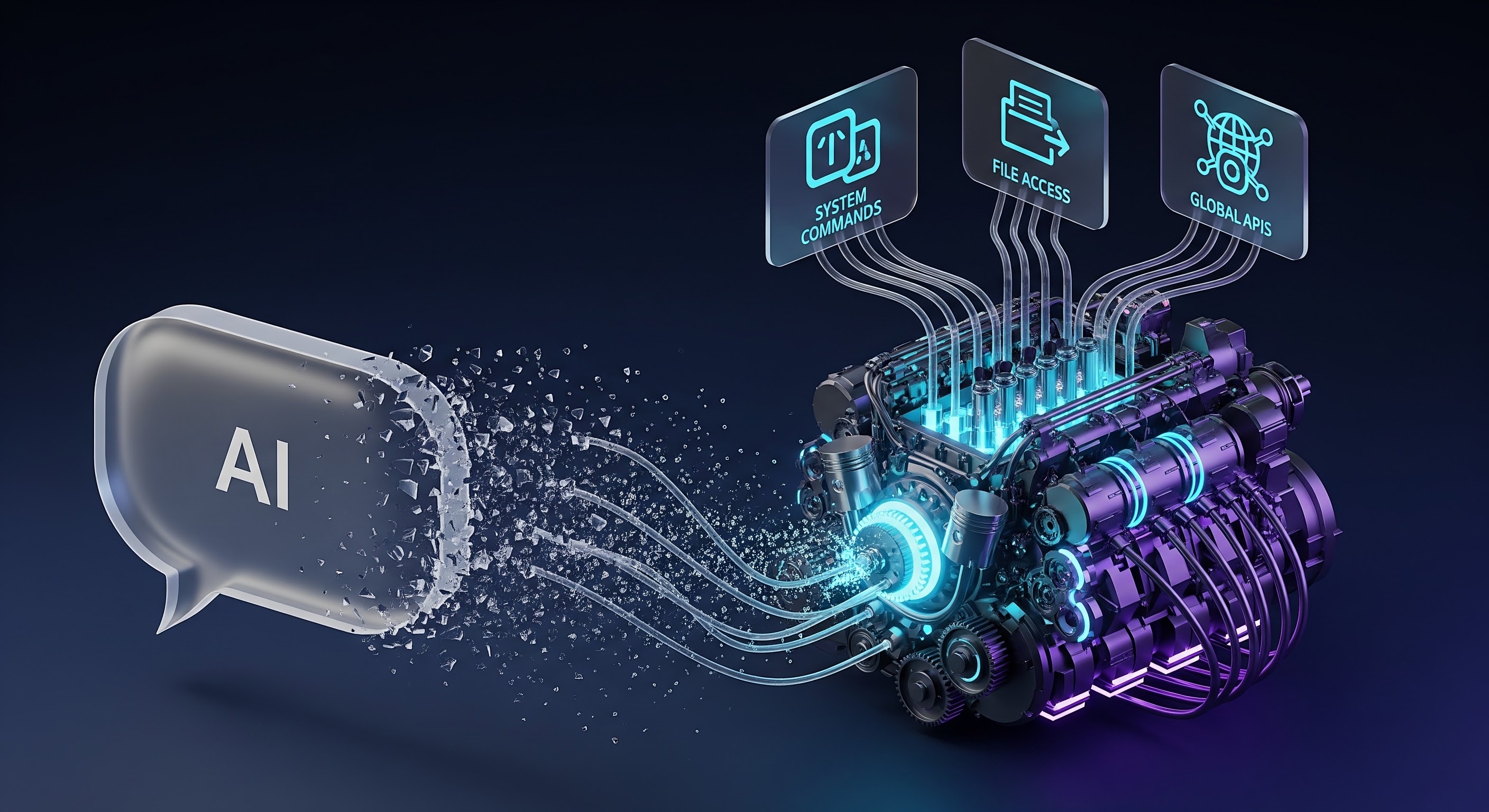
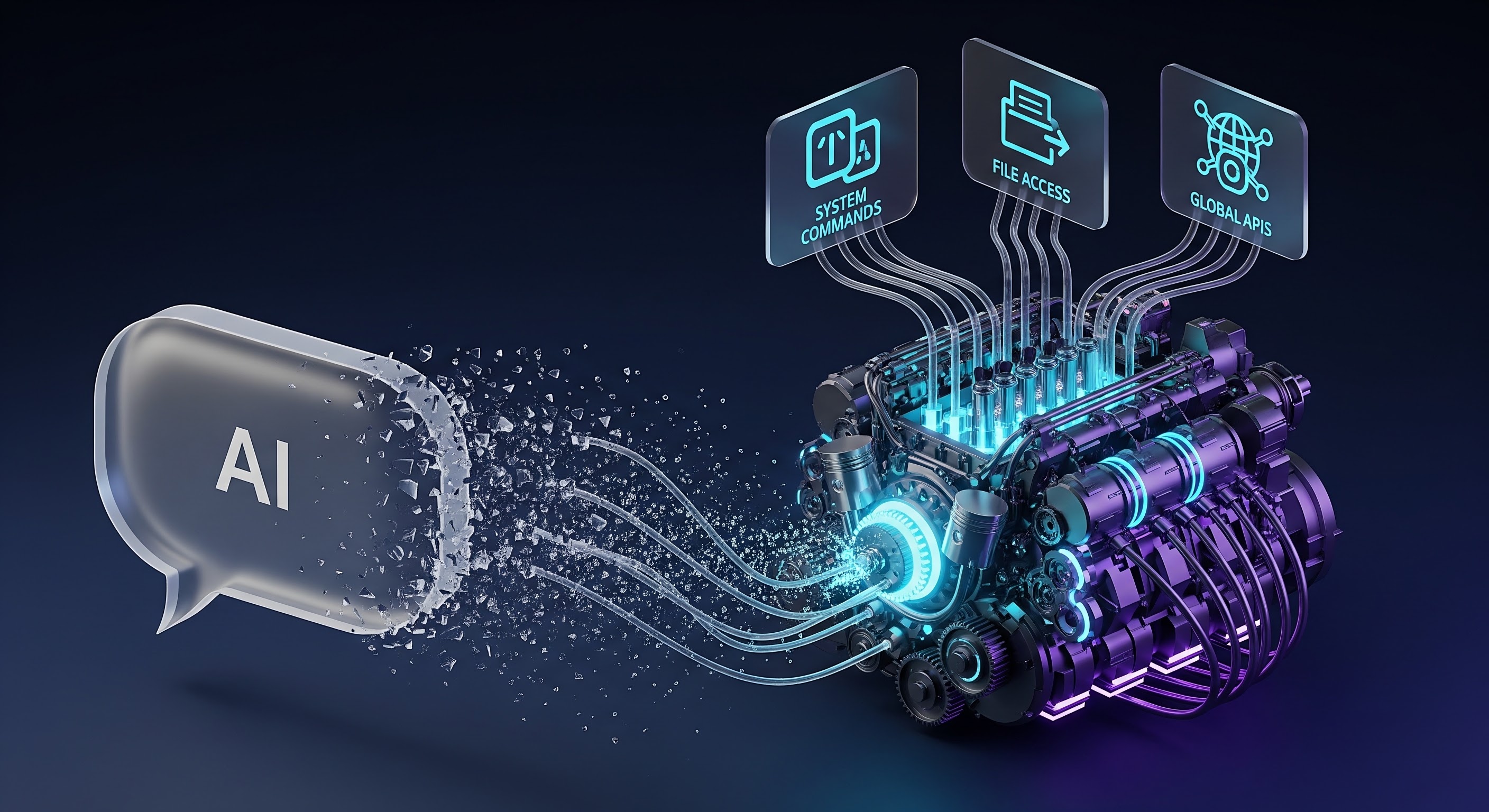
The tech world is in the middle of a hard pivot: we’re moving from “conversational AI” to an ecosystem of autonomous agents. This shift—often called the Action Pivot—isn’t about getting better at searching or generating text. It’s about AI that can execute system-level commands, chain multi-tool workflows, and operate directly against real enterprise infrastructure. In other words: the rise of agentic operating systems.
One project has become a real catalyst here: OpenClaw. It’s an open-source, breakout framework that pushes automation’s boundaries outward—so organizations can run self-hosted, always-on agents on private infrastructure.
OpenClaw also marks the end of the “chatbot era.” For years, enterprise AI mostly meant reading docs, summarizing, and doing light analysis. OpenClaw changes the baseline expectation: AI should take action. In just weeks, it crossed 160K GitHub stars—outpacing long-standing infrastructure projects—and became one of the most visible non-aggregator repos on the platform. That kind of momentum isn’t just hype; it’s a signal that companies are switching to software that works like a teammate. Welcome to the Agentic Era.
For operators, OpenClaw comes with a brutal strategy paradox.https://alphatechnical.solutions/blog/ai-productivity-paradox-j-curve The upside is real: teams report up to 70% lower operating cost and 25–40% faster resolution times in customer support. The downside is equally real: an agent with root-level access that can run shell commands creates a threat surface we haven’t historically had to manage.
The risk is structural:
- OpenClaw agents don’t ship with strong isolation by default.
- The modular “Skill” ecosystem (basically npm for AI agents) can execute arbitrary code.
- That opens the door to data leakage, privilege escalation, and lateral movement inside your network.
If you want real transformation, you can’t treat OpenClaw as a weekend install. You need an enterprise-grade, cloud-native architecture—and a governance model built on three pillars:
- Infrastructural Isolation
- Behavioral Guardrails
- Human-in-the-Loop (HITL) Accountability
Building the base: from laptop scripts to cloud-native infrastructure

The first “invisible” blocker to safe adoption is how often companies start with Laptop-Ops: someone runs OpenClaw as a background process on a company laptop. It feels fast, but it creates three high-impact risks:
1) Secrets sprawl: API keys and tokens end up sitting in plaintext config files.
2) Zero local boundaries: the agent can access essentially the entire file system—source code, customer data, even personal documents.
3) No production hygiene: laptops aren’t built for 24/7 uptime, redundancy, network stability, or security monitoring—so failures (or compromises) can go unnoticed.
To reduce blast radius, production agents should be forced into containerized deployment templates.https://www.tencentcloud.com/techpedia/139890 That gives you a controllable sandbox and pulls OS + network access into policy.
Going cloud-native also unlocks real advantages: network isolation via firewall rules, server-hardened OS images, and a smaller attack surface by stripping unnecessary services. When you scale from pilot to production,https://alphatechnical.solutions/blog/scaling-ai-manufacturing-excellence you can also tune the OS for high-concurrency workloads (connection limits, file descriptor ceilings) so multi-step tasks don’t fall over under load.
Agentic AI also forces a rethink of identity and secrets management. Traditional “rotate credentials occasionally” workflows simply don’t work when a single run may touch hundreds of OAuth tokens and API keys. For production reliability, you need to move from local config files to an enterprise vault.https://www.hashicorp.com/en/resources/secure-ai-agents-with-langflow-vault-prisma-airs-on-aws-eks
A dedicated token vault becomes your single source of truth and enables dynamic issuance:
- mint secrets only when needed,
- scope them to minimum required permissions,
- and expire them automatically within minutes.
Even better: the model doesn’t need to “see” the raw secret—agents can operate on API results, reducing the chance that keys get captured in logs or outputs.
Behavioral governance: keep speed, add control

Governance is hard in agentic systems because you’re trying to preserve what makes agents valuable—speed and autonomy—while preventing catastrophic mistakes.https://alphatechnical.solutions/blog/digital-poka-yoke-enterprise-ai
Unlike traditional software, agent behavior is non-deterministic: the next step is chosen at runtime based on goals and external context. That means governance can’t be a static checklist. It has to be dynamic and enforceable at the moment of action.
In practice, that means focusing on:
- extension auditability (Skills + prompts + commands), and
- machine-enforceable policies.
OpenClaw’s modular ecosystem runs on community-distributed “Skills.” These are executable scripts plus prompts/instructions that get pulled into the agent’s context. The recent ClawHavoc poisoning campaign made the risk real: malicious Skills masqueraded as office tools or crypto trackers, then social-engineered users into running commands that installed malware or opened reverse shells.
If you’re going to production, you need a zero-trust review pipeline:
- static code scanning,
- semantic prompt review (to detect hidden instructions),
- and sandbox “detonation” tests that monitor network + process behavior before approval.
At scale, the next step is Policy-as-Code.https://www.quali.com/blog/governing-agentic-ai-iac-policy-as-code/ You write governance rules in executable form and enforce them at the exact moment the agent tries to do something. Inside a defined safe box, agents can move fast. But once an action crosses a boundary—deleting a database, moving money beyond a threshold—the policy engine blocks it or escalates to human approval.
Prompt injection remains the most critical vulnerability in the agentic era.https://snyk.io/articles/clawdbot-ai-assistant/ Agents process untrusted inputs—emails, web search results, document attachments—and hidden instructions can steer them off-course. One promising defense pattern is a dual-model architecture: a dedicated security model screens inputs and external content first, then passes “clean” context to the execution model.https://www.researchgate.net/publication/396712446_Securing_with_Dual-LLM_Architecture_ChatTEDU_An_Open_Access_Chatbot's_Defense This can block most known attacks with acceptable latency—and tends to outperform rule-only filters.
Operational observability: auditability at agent speed
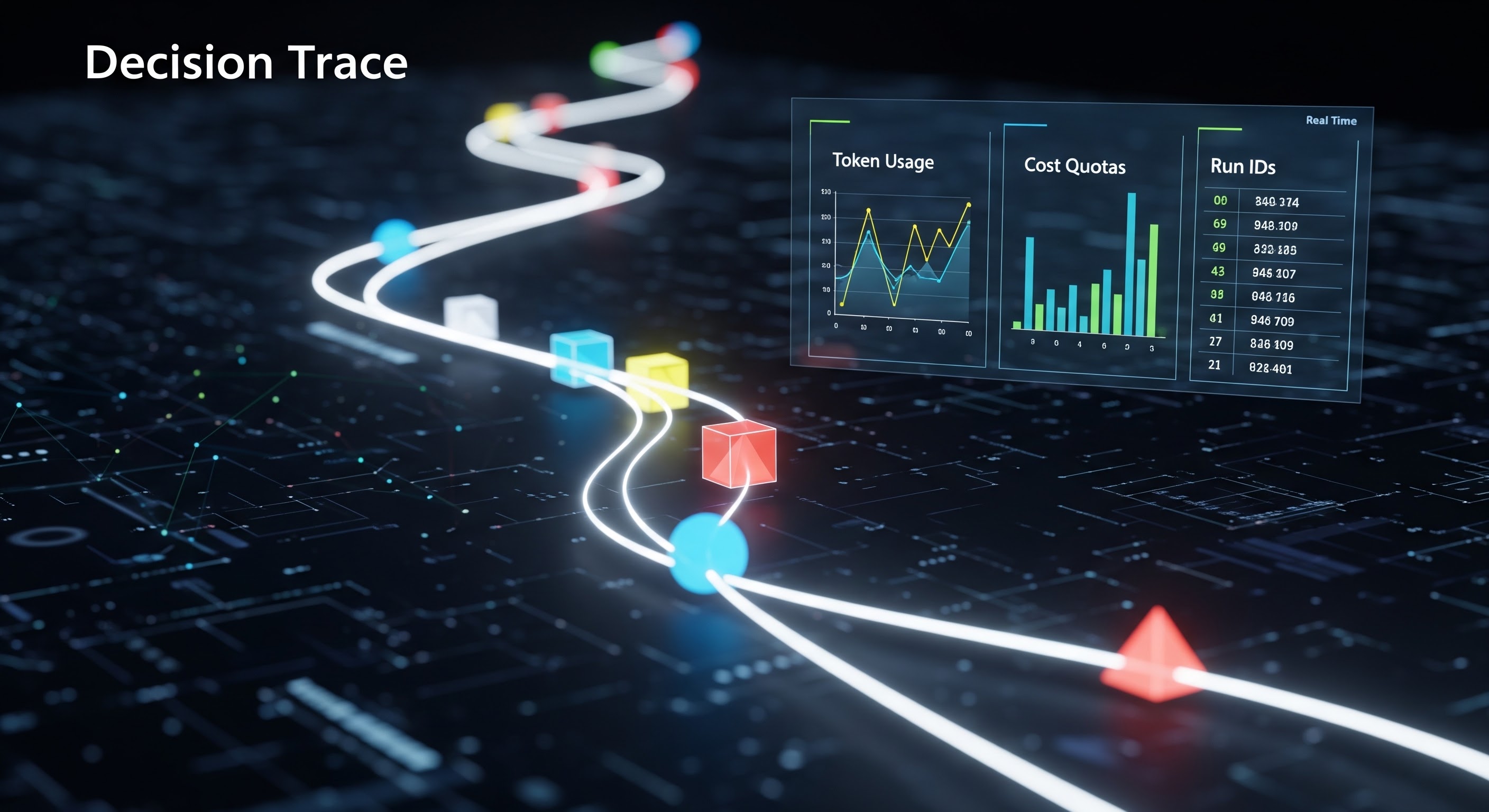
Non-determinism also breaks traditional monitoring. IT teams need AI observability—not just “is it running,” but “why did it decide that.”https://www.rubrik.com/insights/ai-observability
That requires moving from static dashboardshttps://alphatechnical.solutions/blog/generative-bi-reimagining-business-intelligence to traceable audit narratives: use a chainable run ID that ties prompts, model outputs, tool calls, and system changes into one time-ordered story.
Good structured logs should capture:
- prompt inputs,
- reasoning traces,
- tool sequences,
- and final outputs.
This kind of visibility is especially important for diagnosing runaway loops—agents that keep iterating without converging.
Cost and token budgets also become operational requirements. In the agent economy, tokens are metered utilities—and output tokens often cost more than input. Because agentic workflows iterate and self-correct, spend accelerates faster than classic chatbots. Without hard guardrails, a runaway agent can blow up your bill through exponential loops.https://www.braincuber.com/blog/how-to-monitor-ai-agent-costs-in-real-time
So you need token-aware rate limiting: when spend velocity crosses a threshold, automatically throttle or stop runs.
Finally, you need 24/7 monitoring for behavioral drift—unauthorized outbound connections, unusual command patterns—because it may indicate an agent has been hijacked.https://www.crowdstrike.com/en-us/platform/falcon-aidr-ai-detection-and-response/ Assign clear ownership for each agent and build a lifecycle foundationhttps://alphatechnical.solutions/blog/building-data-foundation-for-ai from creation to retirement, so “orphan agents” don’t become permanent backdoors.
Closing: in the autonomy era, governance is leadership

Becoming an agentic enterprise isn’t just a tech upgrade—it’s a shift in culture and operating model. The winners won’t be the companies with the most agents. They’ll be the companies that can run agents safely and at scale.
With a meaningful share of enterprise software expected to embed task agents by late 2026, leadership teams have to confront the AI Leadership Paradox: broad investment only matters if it turns into deep execution.
Organizations that build governance early tend to see outsized returns.https://www.landbase.com/blog/agentic-ai-statistics In telecom and e-commerce, customer workload drops and conversion improves—driving the rise of AIOps teams that shift engineering time from firefighting to “guiding autonomy” toward the hard work.
When you treat agents as high-privilege digital employees—not scripts—and build a hardened cloud-native base today, agentic OS becomes a reliable operating reality, not a risky experiment.
The challenge is clear: moving from experimental AI to production-grade agent orchestration requires a new approach to trust, security, and accountability. If you’re ready to close the gap between innovation and reliability, talk to ATS—we help teams design and ship secure, scalable agentic systems.
相關文章

Manufacturing AIAI Ethics
給 Kaizen 和 AI 的心理安全感:讓團隊敢對錯誤洞察「拉下安燈繩」
AI 洞察若和第一線判斷衝突,Kaizen 就會卡住。建立心理安全感,讓團隊敢拉下安燈繩、修正錯誤決策。
JRJonathan Rudich
•
Manufacturing AIAI Strategy
精實先行,不是模型先行:最強工業 AI 團隊會先刪流程再上 AI
工業 AI 不是因為模型不夠好才失敗,而是把模型疊在本來就該被簡化或刪掉的流程上。先做精實診斷、移除浪費並標準化,再決定哪些步驟值得建模,AI 才能從 pilot 走向可規模化的 program。
JRJonathan Rudich
•