The AI Transformation of Quality Control: From Visual Inspection to Autonomous Closed-Loop Manufacturing

1. Introduction: The Quality Imperative in the Age of Industry 4.0
The global manufacturing sector stands at a precipice of fundamental transformation. For over a century, the paradigm of quality control (QC) has remained largely static: a defensive fortification designed to filter out defective products before they reach the customer. It has been a discipline defined by containment, relying heavily on the human eye and rigid, rule-based automation. However, this reactive model is crumbling under the strain of modern industrial requirements. As production speeds increase and product complexity explodes, traditional quality assurance methods are becoming the bottleneck rather than the safeguard.
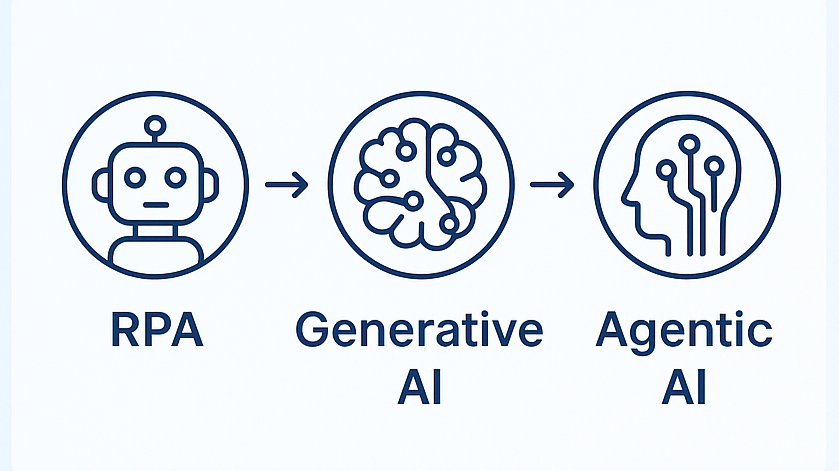
We are witnessing the dawn of Quality 4.0, where Artificial Intelligence (AI) is not merely a tool for better inspection but the catalyst for a holistic reimagining of production.
This shift is about the convergence of Operational Technology (OT) and Information Technology (IT) into a unified, intelligent nervous system capable of perceiving, analyzing, and self-correcting in real-time. The transition from manual visual inspection to autonomous, closed-loop manufacturing represents one of the most significant value-creation opportunities in industrial history, promising to turn the "cost center" of quality control into a primary engine of profitability, sustainability, and competitive advantage. See how this drives The AI-Native Industrial Revolution: Redefining Manufacturing through Generative Intelligence.
2. The Legacy Landscape: The Asymptotic Limits of Human and Rule-Based Inspection
To understand the trajectory of AI, one must first quantify the inefficiencies of the status quo. The current landscape is dominated by two primary methods: manual human inspection and rule-based machine vision. Both have reached their performance limits.
2.1 The Human Factor: The Biology of Error
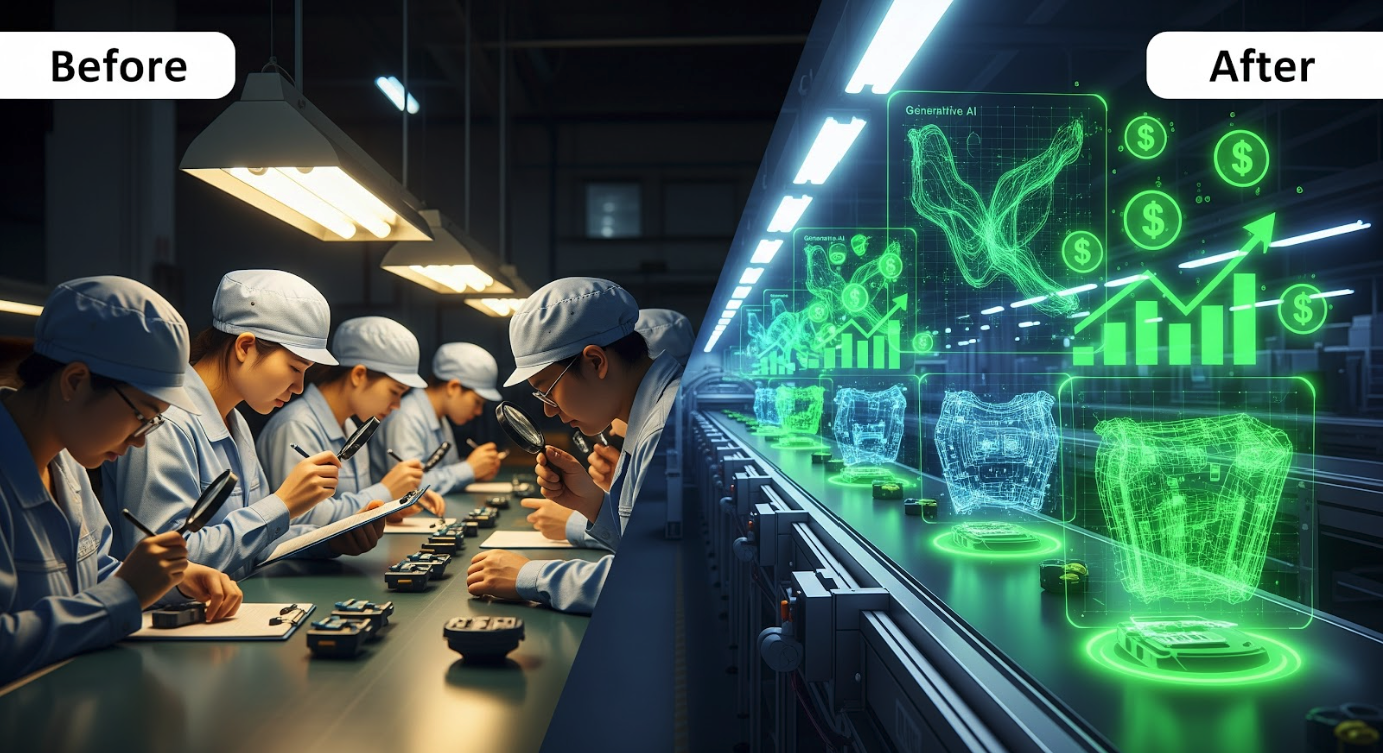
Visual inspection leverages the human visual cortex's ability to detect flaws and interpret context. However, biology imposes strict limits. Research demonstrates that human error rates in visual inspection tasks can reach as high as 30%. Even in high-precision environments, human reliability rarely exceeds 80%. This is not incompetence; it is physiology. The human brain is wired for novelty, not repetition. Attention degrades rapidly on an assembly line, leading to "inattentional blindness."
The economic consequences are staggering. These inefficiencies contribute to the "Hidden Factory"—capacity silently consumed by rework and scrap. It is estimated that scrap and rework can cost manufacturers up to 2.2% of their annual revenue. For a $1 billion corporation, this translates to $22 million in avoidable costs. Top-performing facilities utilizing advanced tech see these costs drop to 0.6%, highlighting the immense economic opportunity for AI adoption and the value of Scaling AI to Drive Manufacturing Excellence.
2.2 The Era of Rule-Based Machine Vision (Gen 1.0)
To transcend human limitations, the industry adopted rule-based machine vision. These systems use explicit programming logic—"if pixel brightness < 50, then defect"—to perform specific checks. While they solved the issues of speed and fatigue, they introduced a new limitation: rigidity.
Rule-based algorithms are brittle. They fail when environmental conditions shift (e.g., lighting changes) or when product variation occurs. Quality engineers often find themselves trapped in a cycle of constant reprogramming to account for every new variable. This rigidity confines traditional vision to highly controlled environments, leaving complex, qualitative judgments to the fallible human workforce.
3. The Technological Renaissance: Deep Learning and Generative AI

Artificial Intelligence, specifically Deep Learning (DL), represents a discontinuity in industrial automation. Instead of being programmed what to look for, DL models are trained to learn patterns, mimicking the neural architecture of the human visual cortex.
3.1 Deep Learning vs. Traditional Machine Vision
Deep learning models process visual information through layers of abstraction, allowing them to succeed exactly where rule-based systems fail: handling variability. A DL model trained on thousands of examples can distinguish between a harmless dust particle and a critical micro-scratch with superhuman consistency.
Recent benchmarks show modern AI models pushing 98-99% accuracy in controlled datasets. While "real world" implementation remains challenging due to unstructured data, the ability of AI to generalize from training data fundamentally changes the economics of inspection. It allows for the automation of "judgment-based" tasks previously reserved for humans.
3.2 Generative AI: Solving the Data Scarcity Paradox
A major hurdle in AI deployment is the "Data Scarcity Paradox," which underscores the need for Building the Data Foundation for AI: The Hidden Key to Enterprise AI Success. Efficient factories produce few defects, making it difficult to collect enough images to train an AI model. Generative AI (GenAI) is revolutionizing this by creating synthetic data. GenAI models can digitally "paint" realistic defects onto images of good parts, allowing manufacturers to train robust models before a single defective part is produced.
This "cold start" capability accelerates deployment from months to weeks. Manufacturers utilizing GenAI for surface defect detection report 200-300% ROI, driven by reduced error rates and faster inspection cycles. Beyond images, GenAI is also automating the processing of technical documentation, further streamlining the quality engineering workflow.
4. Architecture for Intelligence: Integrating AI into Brownfield Factories
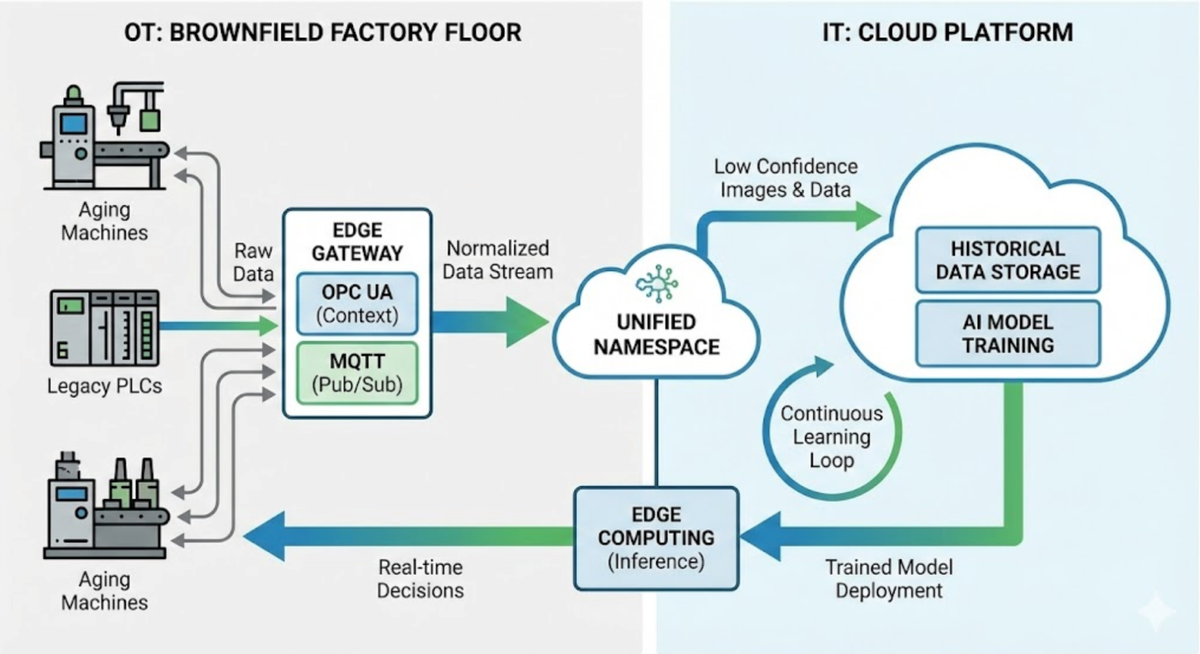
The practical reality of deployment involves integrating cutting-edge AI into "brownfield" factories—aging facilities with legacy equipment. This is a core challenge in Scaling AI in Operations: Managing Change for Sustainable Impact. This requires a sophisticated architecture bridging the gap between the factory floor (OT) and the digital enterprise (IT).
4.1 The Connectivity Stack: Unifying OT and IT
Legacy PLCs were not designed for high-bandwidth data streaming. To solve this, the industry is adopting a modern connectivity stack defined by OPC UA and MQTT.
- OPC UA: The semantic layer that allows machines to describe their data with context (e.g., unit, variable name).
- MQTT: The transport layer using a "Publish/Subscribe" model. Devices publish data only when it changes, reducing bandwidth consumption by over 80% and enabling real-time responsiveness.
In a typical architecture, an Edge Gateway normalizes raw PLC data and publishes it to a Unified Namespace, where AI applications subscribe to it. This decouples the heavy compute load of AI from the critical control loops of the machinery.
4.2 Edge Computing vs. Cloud Training
Physics dictates that high-speed inspection decisions must be made locally to avoid latency. Therefore, the dominant architecture is Hybrid Edge-to-Cloud.
- Training in the Cloud: The heavy lifting of processing historical data to train models happens in the cloud, leveraging scalable compute.
- Inference at the Edge: Compressed models are pushed to industrial edge devices to make real-time decisions on the line.
Crucially, "low confidence" images are sent back to the cloud for human review and relabeling, creating a flywheel where the system becomes smarter daily.
5. Strategic Case Studies: Realizing Value at Scale
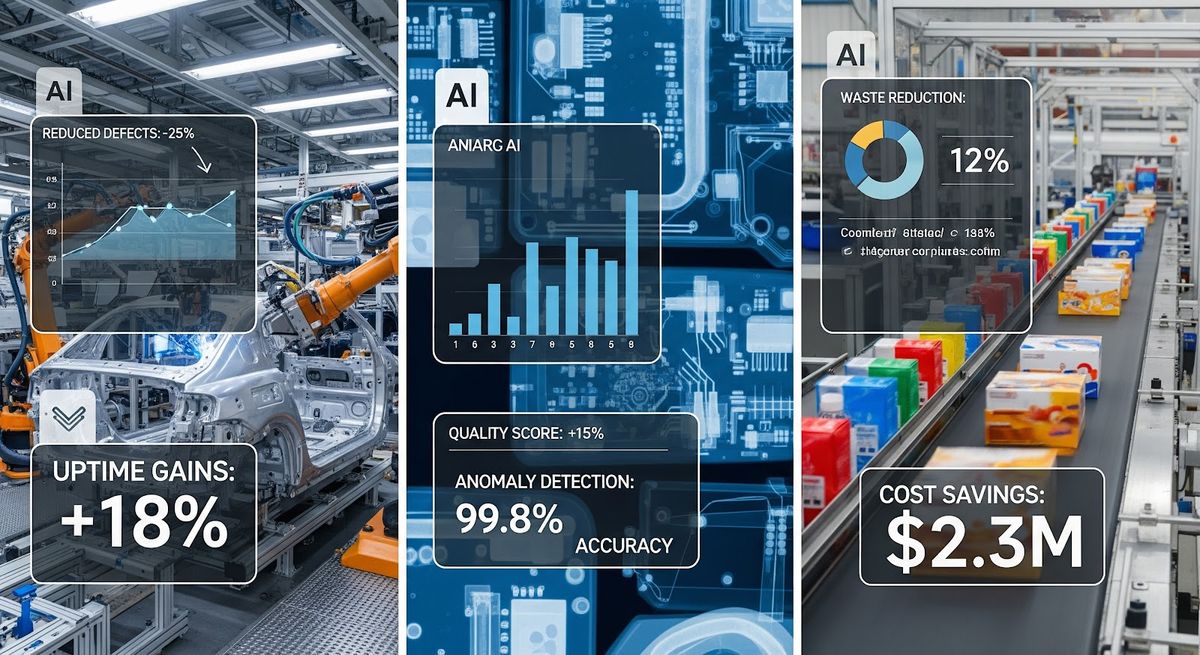
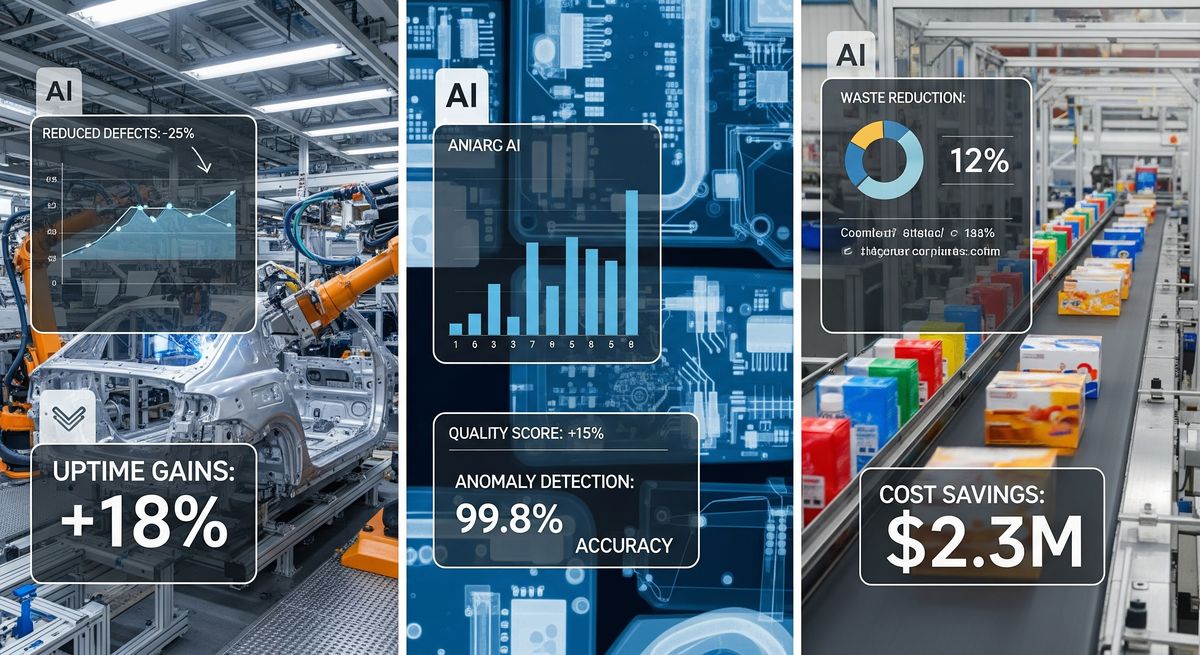
Leading manufacturers are already proving the value of this technology.
5.1 Automotive: BMW and Audi
BMW has moved beyond simple detection to Predictive Quality. This is a crucial step in Mastering Proactive Machine Health with AI-Powered Predictive Maintenance. At their Regensburg plant, AI monitors conveyor technology to identify anomalies before failures occur, avoiding hundreds of minutes of disruption annually. Additionally, their GenAI4Q project generates customized inspection catalogs for every unique vehicle, handling the complexity of mass customization.
Audi uses AI for automatically identifying and removing microscopic metal droplets that could damage cables. This ensures 100% inspection while removing humans from hazardous tasks.
5.2 Electronics: Siemens Amberg
The Siemens Plant in Amberg faces a "high-mix, low-volume" challenge. By deploying AI to analyze X-ray images of Printed Circuit Boards (PCBs), they drastically reduced "pseudo-errors" (false positives). This increased the effective capacity of existing equipment, avoiding a €500,000 capital expenditure for new machines and helping the factory achieve a 99.9999% quality rate.
5.3 Consumer Goods: Procter & Gamble
P&G established an internal AI Factory platform to deploy models globally. In one instance, AI-driven insights integrated with supply chain data led to a 15-point reduction in out-of-stock items in Brazil. This demonstrates that AI in quality control transcends the factory walls, stabilizing the supply chain and securing revenue.
6. Beyond Defect Detection: Root Cause Analysis and Closed-Loop Manufacturing
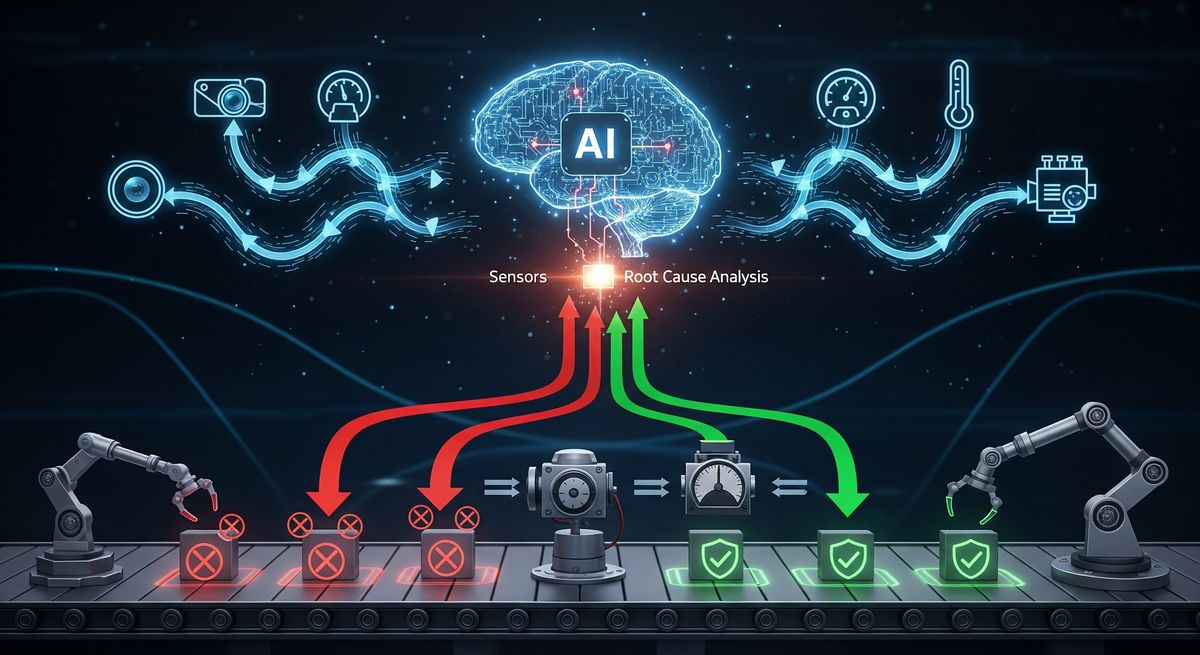
The next wave of AI focuses on preventing defects entirely through "Closed-Loop Manufacturing."
6.1 The Power of Causal AI
Traditional root cause analysis is forensic and slow. Causal AI automates this by correlating defect data with process telemetry (temperature, pressure, vibration) in real-time. It can distinguish between mere correlation and actual causation, pointing engineers directly to the source of the problem—such as a humidity spike causing a cold weld.
6.2 The Autonomous Loop
The ultimate goal is the Autonomous Closed Loop. Here, the vision system detects a trend (e.g., paint thickness drifting), and the control AI automatically adjusts the process parameters (e.g., spray pressure) to correct it before a defect is created. Research into Closed-Loop Manufacturing indicates potential material savings of 12% and operational cost reductions of 15%, shifting the focus from inspecting "out" the bad to guaranteeing the good.
7. The Economics of Quality & Sustainability
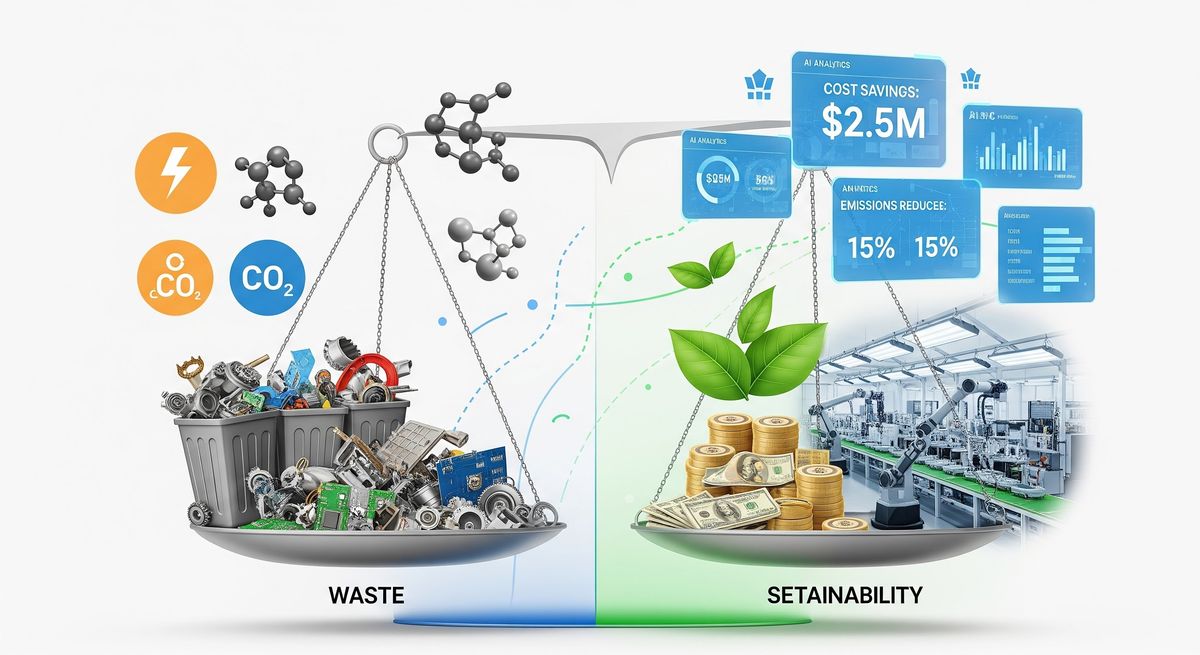
Quality Control is intrinsically linked to sustainability. Every defective product represents wasted energy, materials, and carbon emissions.
7.1 The Green Dividend
Producing steel from scrap saves 60% of the energy compared to virgin ore, but not producing scrap is infinitely more efficient. A major packaging manufacturer cut waste by 22% through better quality control, saving $1.2 million annually. AI-enabled systems also provide granular data for carbon accounting, allowing manufacturers to calculate the precise carbon footprint of their "Cost of Poor Quality."
7.2 ROI Models
The economic model is shifting from heavy CapEx to OpEx. Subscription-based platforms allow manufacturers to scale costs with usage, lowering the barrier to entry. The proven ROI—often achieved in under two years—validates AI vision as a financial imperative, not just a technical one.
8. Governance, Workforce, and the Future Outlook
Integrating AI necessitates a transformation of the workforce, which requires careful consideration of the AI talent landscape, and robust governance.
8.1 The Workforce Transformation
The narrative of "robots taking jobs" is simplistic. AI automates the tedious task of staring at conveyor belts, evolving the "Quality Inspector" into an "AI System Manager." Workers now supervise models, handle complex edge cases, and drive root-cause improvements. AI acts as a co-pilot, filtering out the 99% of obvious cases and presenting only the ambiguous 1% to human experts.
8.2 Governance and Trust
Trust is paramount. Manufacturers are deploying "Explainable AI" to visualize decision-making (e.g., heatmaps) for regulatory audits. Robust AI Governance frameworks, aligned with principles like The UNESCO Recommendation, are essential to monitor for bias and drift, ensuring that AI decisions remain safe and reliable.
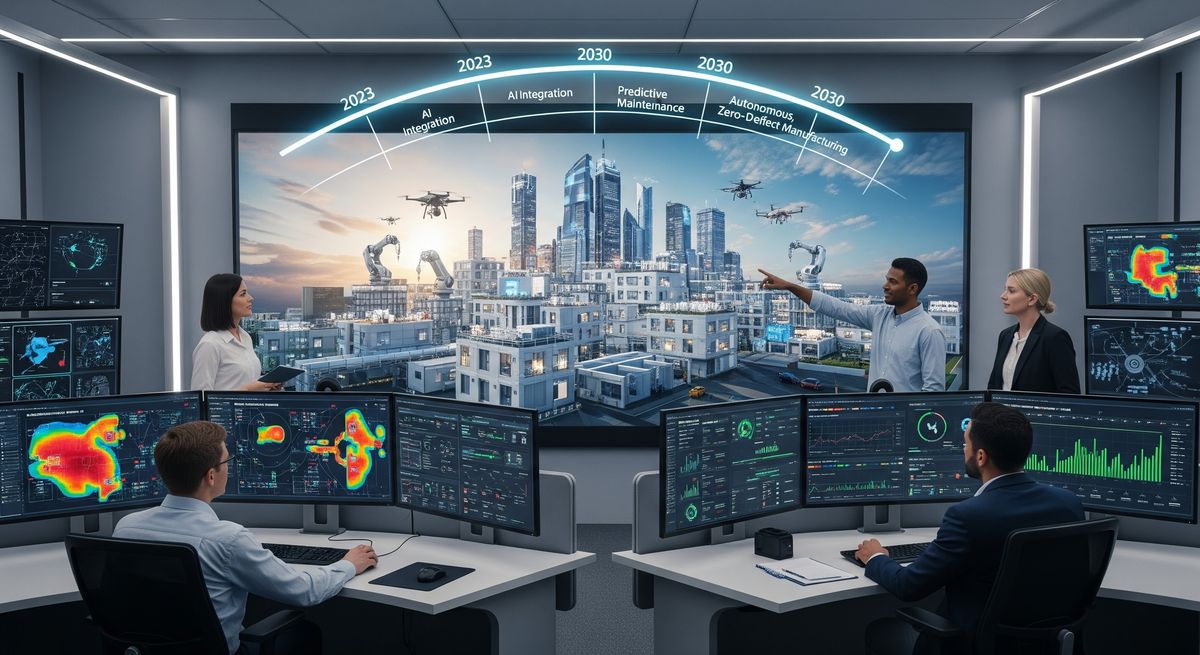
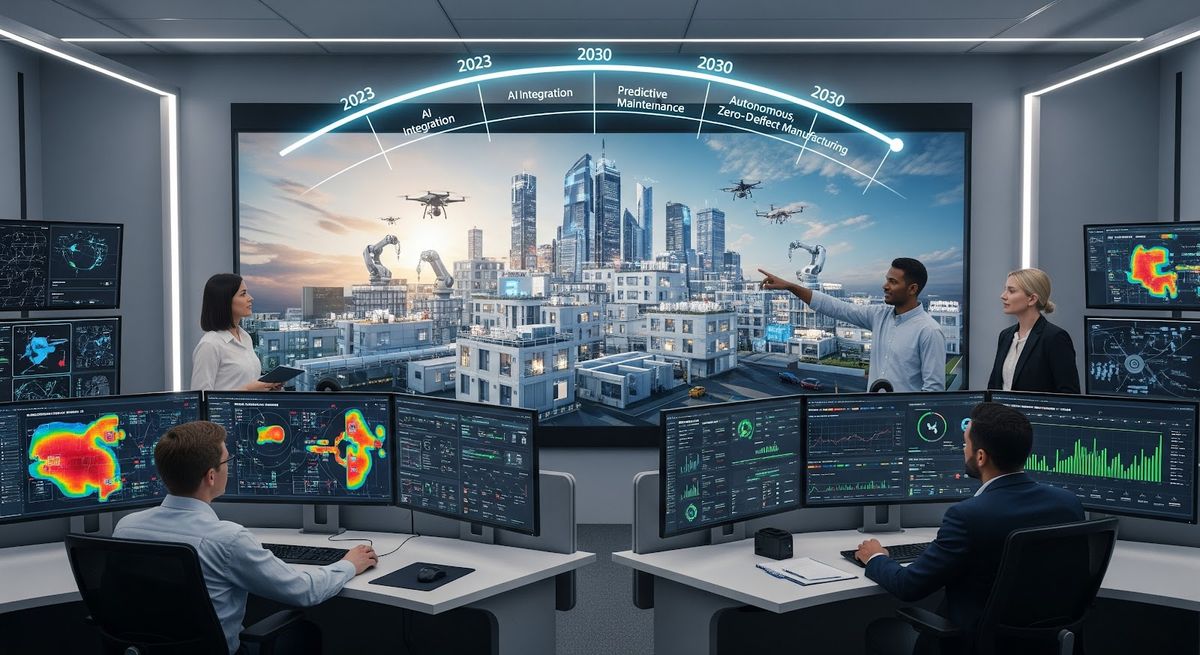
8.3 The Road to 2030
By 2030, Quality Control will likely cease to be a separate department. It will be an intrinsic, coded property of the manufacturing system. With the convergence of GenAI, Edge Computing, and Causal reasoning, the industry moves closer to the "Zero Defect" reality. Manufacturers who master this transition today will define the industrial standards of the 21st century.
Navigating this complex transition from manual inspection to autonomous, data-driven quality ecosystems requires not just vision, but practical implementation strategies that respect the nuances of existing brownfield environments. For organizations seeking to accelerate this transformation and integrate cutting-edge defect detection, predictive analytics, and automated decision-making into their workflows, Alpha Technical Solutions provides the specialized expertise necessary to turn the promise of Quality 4.0 into a measurable competitive advantage.